 Bellingham Exterior
 Storm Damage Roof Repair for Cordata Homes
Cordata sits in north Bellingham, close enough to the water and open farmland that roofs here take a different kind of beating than roofs a few miles inland. Homes in this part of Whatcom County deal with a mix of salt-tinged air rolling in off Bellingham Bay, wind-driven rain that doesn't just fall straight down but gets pushed sideways under shingle edges, and a moss season that runs long and wet for most of the year. When a windstorm or a heavy rain event finally exposes a weak spot, it's rarely bad luck alone — it's usually one of those slow, ongoing conditions finally catching up with the roof. This page covers what storm damage actually looks like on a Cordata roof, what a correct repair involves, and how we handle the work from first inspection to final cleanup.
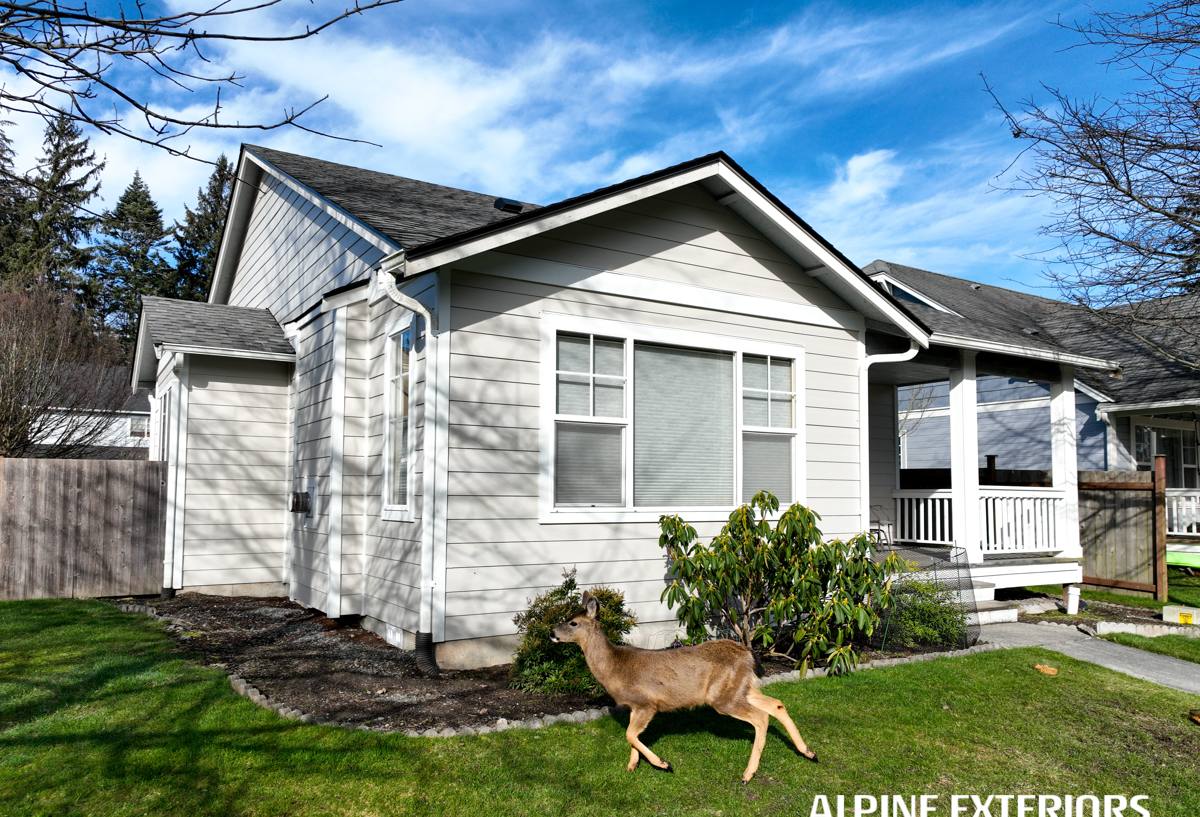
Why Cordata Roofs Take Storm Damage Differently
Every roof in Bellingham deals with rain. What sets Cordata apart is the combination of factors working on a roof at the same time, year-round.
Salt Air and Metal Fatigue
Proximity to the bay means a fine layer of salt-laden moisture settles on roofing metal — flashing, fasteners, gutter hangers, vent caps — over time. That doesn't destroy a roof on its own, but it accelerates corrosion on lower-grade metal, and corroded flashing is one of the first things to fail once wind gets underneath a shingle edge during a storm.
Driving Rain and Wind Direction
Storms coming off the water tend to push rain at an angle rather than straight down. That matters because a roof can be watertight against vertical rain and still leak the moment wind starts driving water sideways under laps, around chimneys, or into valleys that weren't sealed with enough overlap to begin with.
A Long, Wet Moss Season
Whatcom County's moss season stretches for much of the year on north-facing and shaded slopes, which describes a lot of Cordata's tree-lined lots. Moss holds moisture against the shingle surface, lifts tabs as it grows, and quietly rots the felt or decking underneath long before anyone notices a leak. A storm often just finishes what moss started — a gust catches an already-lifted tab and peels it back, or the added weight of saturated moss and debris is what finally moves loosened shingles.
What Actually Counts as Storm Damage
Not every roof problem after a storm is storm damage in the insurance sense, and it's worth knowing the difference before you file a claim or pay for a repair out of pocket.
- Wind uplift: shingles or tabs lifted, cracked, or torn loose, often along ridges and roof edges where wind pressure is highest
- Wind-driven rain intrusion: water tracking in around flashing, valleys, or vent boots that held fine in normal rain but failed under sideways wind pressure
- Impact damage: branches, cones, or debris knocked loose in wind, denting or puncturing the roof surface
- Flashing failure: corroded or wind-loosened flashing around chimneys, skylights, and dormers
- Pre-existing moss or rot exposed by the storm: not always covered by insurance, but often what the storm reveals rather than what it caused
That last category matters. A honest assessment tells you which parts of the damage were caused by the weather event and which parts were a maintenance issue that the storm just made visible. Insurance adjusters draw that line, and so do we — it's part of giving you a repair estimate you can actually trust.
What a Correct Storm Repair Involves
A storm repair done right isn't just replacing the shingles that are visibly missing. It's a sequence, and skipping steps is how the same spot leaks again in the next storm.
1. Decking Inspection
Once the damaged shingles are pulled back, the decking underneath gets checked for soft spots, rot, or delamination — especially if moss or a slow leak had been sitting on that section before the storm hit. Damaged decking gets replaced, not covered over.
2. Underlayment and Flashing
Underlayment in the repaired area is replaced, not patched, and flashing around any nearby penetrations — vents, chimneys, valleys — gets inspected and resealed or replaced if it's corroded or was part of the failure. This is the step that most affects how a repair holds up against the next wind-driven rain event.
3. Matching Materials
We match shingle profile and color as closely as the existing product allows. Exact matches aren't always possible once a roof has weathered for a few years, and we'll tell you honestly if a perfect blend isn't realistic rather than promise one we can't deliver.
4. Re-securing and Sealing
Proper nailing pattern and sealant at laps and edges — the details that keep the next windstorm from lifting the same section again.
Our Process, Start to Finish
- Inspection and documentation: we get on the roof (or use a drone where pitch or access makes that unsafe) and photograph the damage in detail, including anything an adjuster would need to see
- Honest scope of work: we tell you what's storm damage, what's pre-existing wear, and what your realistic repair options are
- Insurance coordination: if you're filing a claim, we can walk your adjuster through the damage and provide documentation — we don't inflate estimates to chase a bigger payout, because that approach tends to backfire on homeowners at claim time
- Temporary protection: if there's active leaking, we'll get a tarp or temporary seal on before scheduling the full repair
- Repair: decking, underlayment, flashing, and shingles addressed in the right order, not just a surface patch
- Cleanup and walkthrough: debris cleared, gutters checked for granule buildup or blockage from the storm, and we walk the finished work with you
Cost Factors in Storm Damage Repair
Every storm repair is different, but the same handful of factors drive most of the cost variation. This table gives you a sense of what to expect without pretending there's one fixed price for "storm damage repair."
| Factor | Why It Matters |
|---|---|
| Extent of decking damage | Replacing decking is a bigger job than replacing shingles alone, and moss-related rot often means more decking needs replacing than the storm damage alone would suggest |
| Roof pitch and access | Steeper roofs and hard-to-reach sections take longer and require more safety equipment, which affects labor time |
| Flashing condition | Corroded flashing (more common on salt-exposed roofs) usually needs full replacement rather than resealing |
| Shingle age and availability | Older roofs may need a wider repair area if matching shingles are hard to source, since patching with mismatched product isn't a repair we'd stand behind |
| Insurance deductible | Your out-of-pocket cost often comes down to your deductible more than the repair cost itself once a claim is approved |
Why Local Experience in Cordata Matters
A roofing crew that already works this part of Bellingham knows the pattern before they get on the roof: which streets sit close enough to the bay that flashing corrodes faster, which lots have enough tree cover that moss and storm damage tend to show up together, and how the local permitting process works if a repair needs to be pulled through the city. That familiarity translates into faster, more accurate estimates and fewer surprises once we're up there. It also means we can respond quickly after a storm event hits the area, rather than you waiting behind a crew that has to drive in from somewhere else in the county.
Reducing Repeat Storm Damage
Storm damage repair fixes the immediate problem, but a few ongoing habits make the next storm less likely to cause the same kind of damage.
- Keep moss growth under control on north-facing and shaded slopes — moss removal before it takes hold is far cheaper than the rot repair that follows if it's ignored
- Trim back tree limbs that overhang the roofline, since falling branches are a common source of impact damage in wind events
- Have flashing and roof edges checked every year or two, especially if your home is closer to the water and more exposed to salt air
- Clear gutters before the wet season so wind-driven rain has somewhere to drain instead of backing up under the roof edge
- Address small leaks immediately — a minor leak before a storm is often the exact spot that fails first once wind pressure gets added to the mix
Get an Honest Look at Your Roof
If a recent storm left you with missing shingles, a new leak, or just a nagging feeling that something's not right up there, it's worth getting a professional set of eyes on it before the next weather system comes through. We offer free, no-pressure estimates for Cordata homeowners — we'll tell you plainly what we find, what's storm-related, and what your options are, with no obligation to move forward. Fill out the form below to get started.