 Bellingham Exterior
 Windows Built for Columbia's Bay-Side Exposure
Columbia sits close enough to Bellingham Bay that its homes take on a different set of weather problems than houses further inland. Salt-laden air off the water works on aluminum and steel components over time, wind-driven rain finds its way into gaps that would stay dry in a calmer neighborhood, and the deep shade from mature trees and long Pacific Northwest winters keeps moisture sitting on north- and west-facing walls longer than it should. Windows in this part of Bellingham don't fail because of one dramatic storm. They fail slowly, from years of moisture cycling through seals, frames, and flashing that weren't detailed for this exposure in the first place.
When we talk about "custom" windows for a Columbia home, we don't mean exotic shapes or novelty glass. We mean windows sized, specified, and installed to match the actual conditions of that specific house — its orientation, its wall assembly, its age, and how close it sits to the bay's weather. A window that's correct for a dry inland lot in Whatcom County is often the wrong spec for a home a few blocks from the water.
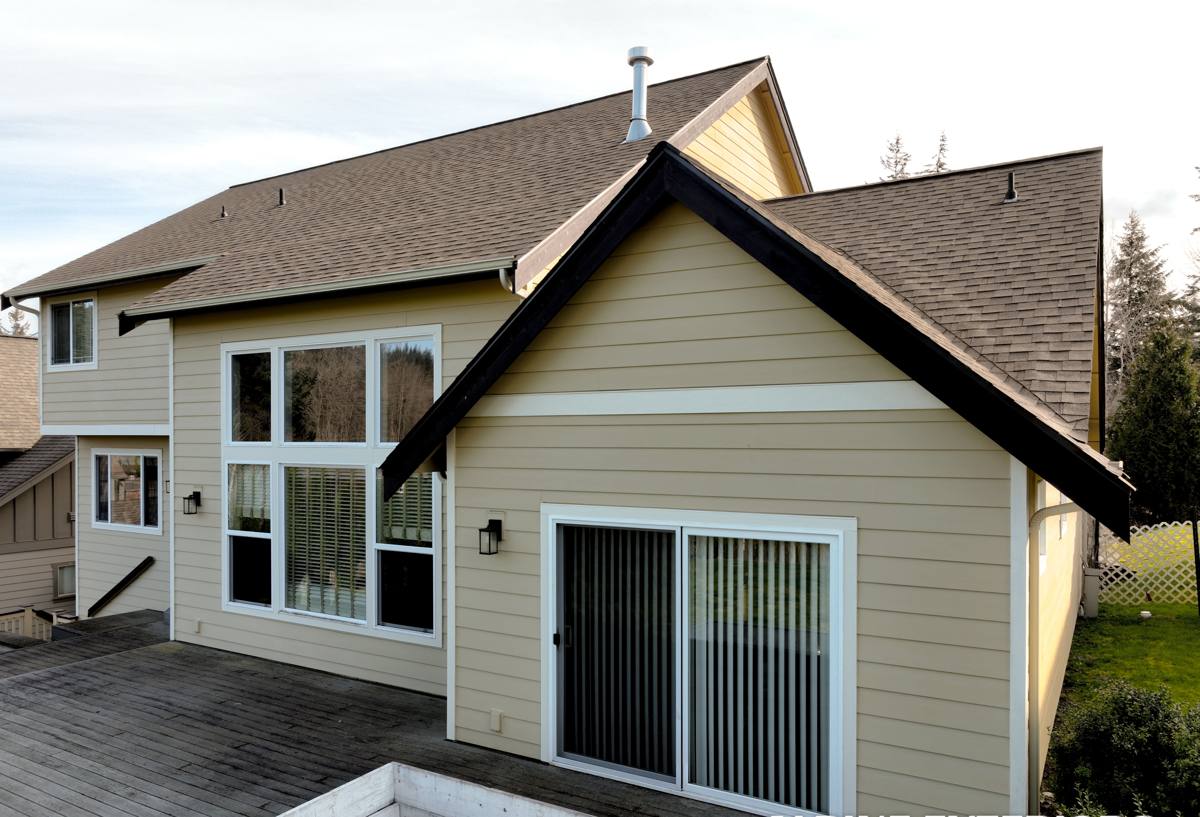
What Whatcom County Weather Does to the Wrong Window
We've pulled enough old windows out of Columbia and nearby Bellingham homes to know the failure pattern by sight. It usually shows up in this order:
- Condensation building between panes, meaning the seal has already failed and the gas fill (if there was one) is gone
- Soft or discolored wood at the bottom corners of the sash and sill, where water sits longest after driving rain
- Corroded or seized hardware — cranks, locks, and hinges — from salt air reacting with unprotected metal
- Green or black growth in the frame corners and against the exterior trim, a sign that moss and mildew have had time to establish because water isn't shedding cleanly
- Drafts that show up specifically during wind events off the bay, not on calm days
None of this means the original window was junk. It usually means the frame material, the flashing detail, or the sealant wasn't matched to this kind of exposure. Fixing that mismatch is the whole point of a custom approach.
Salt Air and Metal Components
Aluminum-clad and steel hardware are common in window manufacturing because they're strong and cost-effective, but bay-adjacent salt air accelerates corrosion on anything without a marine-grade finish. In Columbia specifically, we pay close attention to hardware coatings and cladding finishes rather than assuming a standard residential-grade product will hold up the same way it would twenty miles inland.
Driving Rain and Air-Sealing
Wind off the bay doesn't just fall on a window — it pushes against it. That means flashing, drip caps, and sill pans have to do real work, not just sit there for appearance. A window that's watertight in a still rain can still leak under wind pressure if the flashing wasn't lapped correctly or the sill pan doesn't have a proper back dam.
Moss and Shade
Bellingham's long moss season isn't just a roofing problem. Moss and algae growing against window trim and sills hold moisture against the wood and finish far longer than open sun exposure would. Homes in Columbia with mature landscaping or north-facing walls need finish and trim details that shed water fast and don't give moss anything to grip.
What a Correct Custom Window Job Actually Involves
"Custom" starts before the window itself — it starts with an honest look at the opening. Every window opening on an older Columbia home has settled and shifted a little differently, and manufactured "standard" sizes rarely fit those openings exactly without shimming, gapping, or forcing a frame that isn't square. We measure each opening individually, check for square and level, and inspect the surrounding framing and sheathing for existing moisture damage before we ever order glass.
| Step | Why It Matters in Columbia |
|---|---|
| Opening inspection | Catches hidden rot or moisture damage from prior water intrusion before it's covered up again |
| Frame material selection | Matches corrosion resistance and moisture tolerance to bay-adjacent exposure |
| Flashing and sill pan detailing | Handles wind-driven rain, not just vertical rainfall |
| Sealant and gasket choice | Maintains flexibility through freeze-thaw cycles and constant humidity |
| Hardware finish | Resists salt-air corrosion on locks, cranks, and hinges |
| Exterior trim and drip detailing | Sheds water fast enough to limit moss and algae growth |
Skipping any one of those steps is how a brand-new window ends up with the same failure pattern as the one it replaced, just on a longer timeline.
Choosing the Right Frame Material for This Exposure
There's no single "best" window material — there's a best fit for the specific wall, orientation, and budget. For Columbia homes, we weigh a few honest trade-offs with homeowners rather than pushing one product line as a default.
- Vinyl — low maintenance and good moisture resistance, a solid fit for most Columbia homes on a budget, though color and stiffness options are more limited than other materials
- Fiberglass — handles the expansion and contraction of coastal temperature swings well and holds paint better over time, at a higher upfront cost than vinyl
- Wood with a clad exterior — gives a traditional look that suits many of Columbia's older homes, but the interior wood still needs periodic attention and the exterior cladding has to be genuinely watertight at every joint
- Aluminum — we're selective here; standard aluminum conducts cold and is more exposed to salt-air corrosion unless it carries a marine-grade finish, so we only recommend it when the application specifically calls for it
We'll walk through these trade-offs against your specific home rather than assuming one material is right because it worked somewhere else in Bellingham.
Glass and Seal Specifications That Matter Here
Double-pane, low-E, argon-filled units are the baseline for this climate, but the seal quality between panes matters as much as the glass coating itself. In a high-humidity, temperature-swinging environment like Columbia's, a poorly sealed insulated glass unit will fog between the panes years before it should. We spec glass packages based on the manufacturer's actual seal warranty and track record in wet coastal climates, not just the lowest listed U-factor on a spec sheet.
For homes with strong afternoon sun exposure on west-facing walls, we also talk through solar heat gain coefficient — balancing winter heat retention against summer overheating is a real trade-off, and the right answer depends on which direction your windows actually face.
Our Process for a Columbia Window Project
Every project follows the same sequence, whether it's one window or a full-home replacement:
- On-site assessment of existing openings, framing condition, and current water intrusion or moss issues
- Individual measurement of each opening — no assumption that standard sizes will fit
- Material and glass recommendation based on orientation, exposure, and budget, with trade-offs explained plainly
- Written estimate with a clear scope, so there's no ambiguity about what's included
- Removal of old units with attention to what's underneath — if we find rot or damaged sheathing, we tell you before we close it back up, not after
- Correct flashing, sill pan, and air-sealing installation, not just dropping a new window into an old opening
- Final check of operation, seal, and exterior trim finish before we consider the job done
That fourth and fifth step are where a lot of window jobs go wrong elsewhere — either the estimate is vague about what's actually being replaced, or hidden damage gets covered instead of addressed. We'd rather have that conversation upfront.
Why Local Experience in Columbia Specifically Matters
A crew that's worked windows across Whatcom County knows the general climate. A crew that's worked specifically in Columbia and Bellingham's bay-adjacent neighborhoods knows which walls take the worst of the wind-driven rain, which older homes tend to have settled openings, and which finish details actually hold up against a season of moss rather than just looking good on installation day. That's the difference between a window that performs for its full warranty period and one that starts showing problems in year three.
We're a Bellingham-based crew, and Columbia is part of our regular service area — not a neighborhood we're guessing about.
A Quick Checklist Before You Replace
- Note which windows are hardest to open or close — that's often a frame-settling issue, not just a hardware problem
- Check for fogging between panes, which means the seal is already gone
- Look at the exterior sill and trim for soft wood, peeling finish, or moss buildup
- Feel for drafts specifically during windy, rainy weather rather than on a calm day
- Ask any contractor how they'll handle flashing and sill pan detailing — not just what brand of window they sell
If you're weighing whether it's time to replace windows in your Columbia home, or you just want a straight answer about what's driving a draft or a fogged pane, we're happy to take a look. Estimates are free, there's no pressure, and you'll get a plain explanation of what we find — use the form below to get started.