 Bellingham Exterior
 New-Construction Windows in Fairhaven: What This Job Actually Involves
New-construction window installation is a different job from replacing an old window in an existing wall. When a home is being framed, the windows go in before the siding, before the interior finish, and often before the roof is fully dried in. That means the window install isn't a standalone task — it's one step in a sequence that includes the weather-resistive barrier (the house wrap), the flashing, the siding, and the interior finish work. Get the sequence wrong on a new build and you don't find out for a year or two, when water starts showing up inside a wall cavity that was never meant to see it.
For a home going up in Fairhaven, that sequencing matters more than it would somewhere sheltered and dry. This is a neighborhood close to Bellingham Bay, on ground that catches wind off the water, and it sits inside a part of Whatcom County that gets a long, wet winter with plenty of driving rain. A new-construction window job here needs to be planned around that from the rough-opening stage forward, not patched around it after the siding is on.
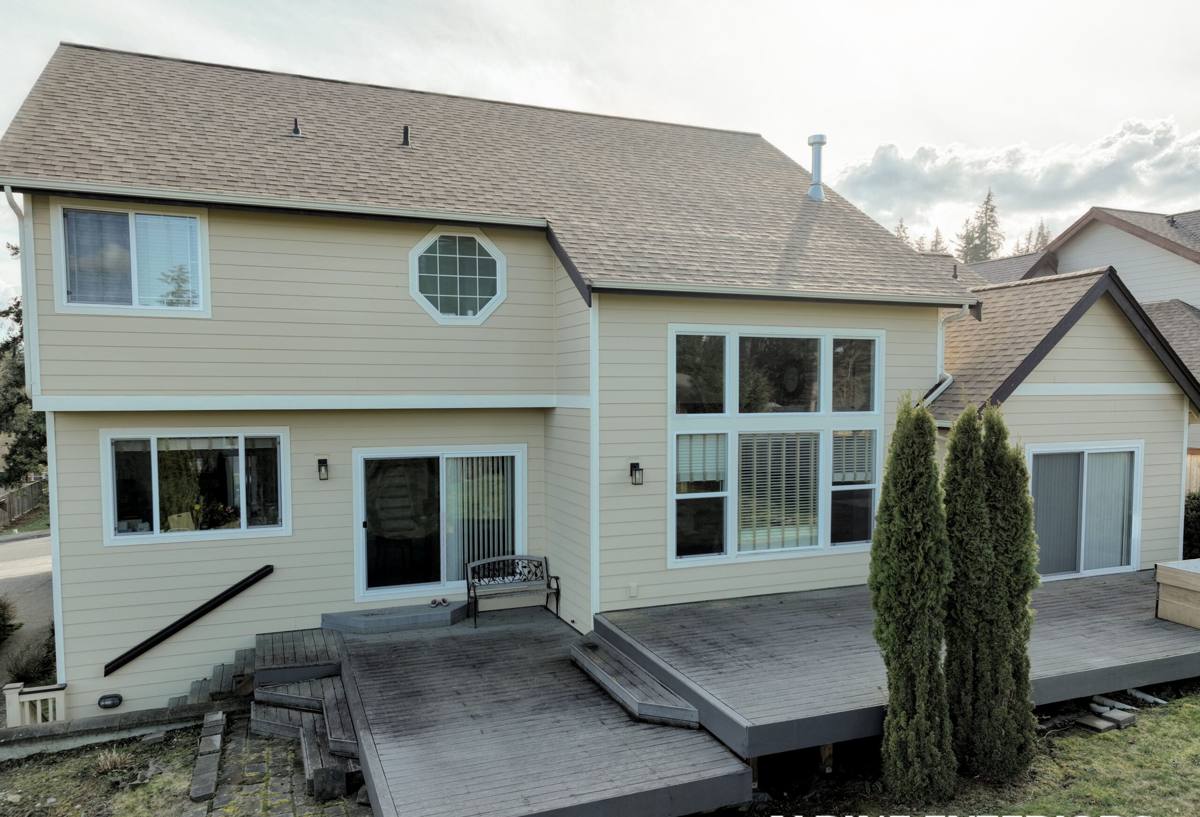
Why Fairhaven's Climate Changes the Install
Salt Air
Homes near Bellingham Bay are exposed to salt-laden air more than homes further inland in Whatcom County. Salt air accelerates corrosion on unprotected metal — fasteners, hardware, and bare aluminum components age faster here than they would ten miles east. That doesn't mean windows near the water are doomed to fail; it means frame material, hardware finish, and fastener selection need to be chosen with that exposure in mind rather than treated as an afterthought.
Driving Rain
Bellingham's weather doesn't just bring rain — it brings wind-driven rain that hits window openings at an angle, especially on west- and south-facing walls that catch storms coming off the water. A window that's watertight when tested with rain falling straight down can still leak under wind-driven conditions if the flashing details around the rough opening weren't built to shed water sideways and downward, in the right order, past every layer.
Moss Season
Whatcom County's long moss season is really just a symptom of extended dampness — the same conditions that let moss take hold on a roof or a north-facing wall also mean any water that does get behind a window has more time to sit before it dries out. On a new build, that raises the stakes on getting the drainage plane and flashing right the first time, since a slow, hidden leak has months of wet weather to do damage before anyone would notice it.
Choosing the Right Window Frame Material for a Fairhaven Build
Frame material is a bigger decision on a coastal build than it is inland. Here's how the common options hold up under Fairhaven's conditions, honestly:
| Frame Material | Salt Air Performance | Maintenance | Typical Cost Tier |
|---|---|---|---|
| Vinyl | Good — won't corrode, some UV fading over decades | Low — occasional cleaning | Lower |
| Fiberglass | Very good — dimensionally stable, resists corrosion and moisture movement | Low | Mid to upper |
| Wood-clad | Depends on cladding integrity — any breach exposes wood to moisture | Higher — cladding and seals need periodic inspection | Upper |
| Bare aluminum | Poor near salt air unless specifically coated and maintained | Higher near the water | Varies |
We don't rule out any of these outright — wood-clad windows have a real place in the right design, and plenty of Fairhaven homes carry that look well. But we're honest with clients about the trade-off: a cladding breach on a wood-clad window near the bay is a bigger long-term risk than the same breach would be on a vinyl or fiberglass frame, simply because of what's underneath. We'll walk through what fits your design, your budget, and how much upkeep you actually want to sign up for.
Getting the Water Management Right
This is the part of a new-construction window install that actually determines whether the window performs for the next few decades, and it's mostly invisible once the siding goes on. The sequence we follow at rough opening:
- Sill pan flashing installed at the bottom of the rough opening first, sloped to drain outward, so any water that does get past the window has somewhere to go besides the framing.
- Weather-resistive barrier integrated with the flashing in the correct shingle-lap order — upper layers always overlapping lower layers, so water is directed down and out at every seam.
- Window set into the opening, shimmed level and plumb, and fastened per the manufacturer's instructions — this is where corrosion-resistant fasteners matter most on a bay-facing wall.
- Flashing tape applied around the nail fin in the correct order — sides first, then the top — so water draining down the wall sheds over the tape seams instead of behind them.
- Head flashing installed above the window where the siding detail calls for it, to break the path of wind-driven rain before it reaches the window head.
- Interior air seal completed with low-expansion foam or backer rod and sealant, separate from the exterior water seal — these two seals do different jobs and neither should be treated as a stand-in for the other.
Every one of these steps is easy to see and correct while the wall is open during framing, and effectively impossible to fix without cutting into finished siding once the home is closed in. That's the entire argument for getting new-construction window flashing right the first time.
Energy Code and Performance
Washington's energy code sets minimum performance requirements for windows based on climate zone, and Whatcom County falls into a zone where U-factor (how well the window resists heat loss) and solar heat gain matter for both code compliance and your actual heating bills. On a new build, window performance also factors into whole-house energy compliance paths your designer or builder is already working through — so window selection isn't just about water and salt air, it's also a piece of the broader energy plan for the house. We coordinate with your builder or designer up front so the windows we're installing match what's actually been specified for permit, not a substitution that creates a compliance gap later.
Our Process on a New-Construction Job
1. Coordination Before Windows Arrive
We review the plans, confirm rough opening sizes against the actual window schedule, and coordinate timing with your general contractor or framer so windows show up on site when the wall is ready for them — not too early, not after the crew has moved on to the next phase.
2. Rough Opening Prep and Flashing
Before a single window goes in, we confirm the opening is square, plumb, and properly sized, and we install sill pan flashing and WRB integration per the sequence above.
3. Setting and Fastening
Windows are set, shimmed, and fastened to manufacturer specifications, with attention to fastener type given the site's exposure to salt air off the bay.
4. Exterior Flashing and Seal
Flashing tape and, where called for, head flashing are installed in shingle-lap order so the whole system sheds water downward and outward.
5. Interior Seal and Walkthrough
We complete the interior air seal and walk the openings with you or your builder before the wall closes up, since this is the last point where anything can be adjusted without opening finished surfaces.
Design Considerations for a Fairhaven Build
Fairhaven has a distinct architectural character, and depending on where your lot sits, your build may fall under design review or historic-district guidelines that affect window style, proportions, or materials — that's something to confirm with the City of Bellingham early in your design process, before windows are ordered. Separate from any formal review, we've found homeowners building in Fairhaven generally want windows that read as part of the neighborhood's older, more detailed streetscape even on a brand-new structure — true divided lites or simulated divided lites, proportions that match the surrounding blocks, and frame colors that don't stand out as obviously new. We can talk through what fits both your design goals and any review requirements that apply to your lot.
Checklist: What a Correct New-Construction Window Install Includes
- Rough openings verified square, plumb, and correctly sized before windows arrive
- Sill pan flashing sloped to drain, installed before the window is set
- WRB and flashing integrated in proper shingle-lap order at every opening
- Corrosion-resistant fasteners specified for bay-facing and exposed elevations
- Flashing tape sequence: sides before top, with no reverse-lapped seams
- Head flashing installed on elevations exposed to wind-driven rain
- Interior air seal completed separately from the exterior water seal
- Window performance specs matched to your project's energy code compliance path
- Walkthrough completed with builder or homeowner before the wall is closed in
Why Hire a Crew That Already Works in Fairhaven
New-construction window installation is a coordination job as much as it's a hands-on trade. It means showing up on the framer's schedule, working around the roofer and the siding crew, and understanding how the local building department expects flashing and rough openings to look at inspection — all before a single piece of trim goes on. A crew that's already done this work in Fairhaven and elsewhere around Bellingham knows what wind-driven rain off the bay actually does to a poorly flashed opening, because we've opened up walls and seen it firsthand. That's a different starting point than a crew that treats every coastal Whatcom County job the same as an inland one.
If you're planning a new build in Fairhaven and want windows installed the right way the first time, we're happy to walk your plans, talk through frame material and flashing details for your specific lot, and give you a free, no-pressure estimate using the form below.