 Bellingham Exterior
 Why Ferndale Roofs Wear Differently Than Roofs Inland
Ferndale sits close enough to the water that homes here deal with a different combination of stresses than roofs twenty miles inland in Whatcom County. Salt-laden air moves in off the Salish Sea, driving rain comes in sideways during winter storms instead of falling straight down, and the long, overcast wet season gives moss and algae months to take hold before a roof ever gets a chance to fully dry out. None of these things by themselves is unusual for Western Washington. Together, on a roof that wasn't detailed correctly for this environment, they shorten its useful life by years.
An asphalt shingle roof that's installed with the right underlayment, flashing, and ventilation for this climate will handle all of it. One that was installed to a generic spec, or installed fast to hit a price, tends to show problems first at the edges: shingle tabs that curl and lift, moss lines forming along north-facing slopes, and nail heads that rust and telegraph through the shingle within a handful of years. This page walks through what actually matters for asphalt shingle roofing on a Ferndale home, and how we approach the work.
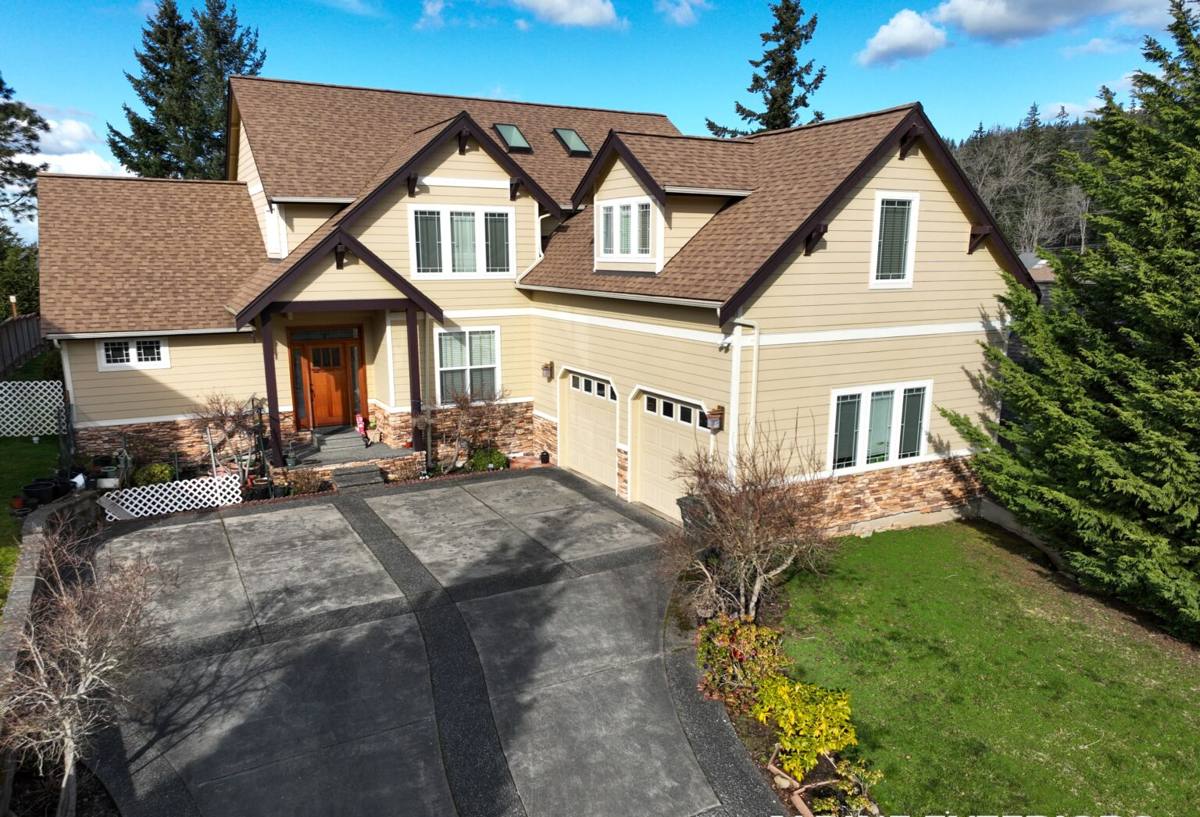
Salt Air, Moss, and Driving Rain: What Each One Actually Does to a Roof
Salt Air and Metal Fasteners
Asphalt shingles themselves aren't bothered much by salt air, but the metal components around them are. Roofing nails, flashing, and drip edge made from lower-grade or unprotected metal corrode faster this close to the water. Once a fastener rusts, it loses grip, and a shingle that's supposed to be locked down through wind events starts to work loose. Corroded flashing at valleys, chimneys, and sidewalls is where leaks usually start, not in the open field of shingles.
Moss and Algae
Whatcom County's wet season runs long, and shaded, north-facing, or tree-covered roof slopes in and around Ferndale can stay damp for weeks at a stretch. Moss doesn't just sit on top of shingles looking bad — it holds moisture against the granule surface, lifts shingle edges as it grows under the tabs, and accelerates granule loss. Once granules wear away, the asphalt underneath is exposed to UV and moisture directly, and that section of roof ages much faster than the rest.
Driving Rain and Wind-Driven Water
Rain that falls straight down mostly runs off the surface of a shingle roof the way it's designed to. Rain that's being pushed sideways by wind behaves differently — it can work up under shingle tabs, push into laps that were fine in calm weather, and find its way through any gap in flashing around a chimney, skylight, or sidewall. This is why the underlayment and flashing details matter as much as the shingles themselves in a coastal-influenced climate like Ferndale's.
What a Correctly Installed Asphalt Shingle Roof Actually Includes
A shingle roof is a system, not a single product. Every layer underneath the visible shingles is doing part of the job of keeping water out, and skipping or shortcutting any one of them is where most premature failures come from.
Ice and Water Barrier at Vulnerable Points
Self-adhering ice and water membrane at eaves, valleys, and around roof penetrations gives a second line of defense exactly where wind-driven rain and ice dams are most likely to force water backward under the shingles. This is inexpensive relative to the roof as a whole and it's one of the details that separates a roof built for this climate from one built to a bare minimum spec.
Synthetic Underlayment
Synthetic underlayment sheds water better than old-style felt, holds up longer if the roof is open to weather during installation, and doesn't wrinkle the way felt can after it's been damp. On a project timeline where weather can turn quickly, that matters.
Flashing That's Actually Formed to the Roof
Step flashing at sidewalls, counter-flashing at chimneys, and properly lapped valley flashing all need to be cut and formed for the specific roof, not just caulked into place. Caulk is a maintenance item, not a waterproofing strategy — if a flashing detail depends on a bead of sealant to stay dry, it will eventually fail.
Balanced Ventilation
Intake at the eaves and exhaust at the ridge need to work together to let the attic breathe. A roof deck that can't dry out between rain events stays damp longer, which feeds moss growth from underneath as well as above, and shortens the life of the decking itself. Ventilation is also one of the most commonly overlooked parts of a re-roof, because it doesn't show up as a defect until years later.
Algae-Resistant, Wind-Rated Shingles
Most major shingle lines now offer algae-resistant (AR) granules, which use a small amount of copper or zinc in the granule blend to slow blue-green algae and moss growth. For a Ferndale roof, especially on shaded slopes, this is worth the small cost difference. Wind rating matters too — a shingle rated for higher wind speeds, installed with the correct nailing pattern, holds up better during winter windstorms off the water.
Repair, or Full Replacement?
Not every roofing problem in Ferndale means a full tear-off. We look at the age of the roof, how much of it is affected, and whether the underlying deck and flashing are still sound before recommending anything. A few isolated missing shingles after a windstorm, or a single failed flashing detail, is usually a repair. Widespread granule loss, moss established across multiple slopes, or a roof already past its expected service life is a different conversation.
- Shingles that are cracked, curling at the corners, or missing granules across large areas
- Moss or algae established on more than a small section of the roof, not just a stray patch
- Daylight visible through the roof deck from inside the attic, or damp insulation
- Rusted, lifted, or missing flashing at chimneys, valleys, or sidewalls
- Granules collecting in gutters in noticeable amounts, especially on an older roof
- Soft spots or sagging when walked, which usually points to deck damage underneath
- A roof approaching or past the manufacturer's expected lifespan for its shingle tier
If you're seeing one or two of these, a repair may be the honest answer. If you're seeing several at once, patching it usually ends up costing more over a few years than doing the job right once.
Our Asphalt Shingle Roofing Process
1. Inspection and Honest Assessment
We start on the roof, not just from the ground. That means checking the deck, existing flashing, ventilation, and the condition of the shingles themselves before recommending repair or replacement. We'll tell you plainly if a repair is the right call — we'd rather earn the full re-roof later than talk you into one you don't need yet.
2. Tear-Off, Not Overlay
We tear off old roofing rather than layering new shingles over old. An overlay hides the condition of the deck, traps moisture between layers, and shortens the life of the new shingles. Tear-off also lets us inspect and replace any damaged decking before it's covered up again.
3. Deck Repair Where Needed
Any soft, rotted, or delaminated decking gets replaced before anything else goes down. This is a step that's easy to shortcut and hard to catch later, which is why we address it before installing underlayment.
4. Underlayment, Ice and Water Barrier, and Flashing
Ice and water membrane goes at eaves, valleys, and penetrations first, then synthetic underlayment across the field, then new flashing formed and installed at every chimney, sidewall, and valley — not reused from the old roof.
5. Shingle Installation
Shingles go down with the manufacturer's specified nailing pattern for wind resistance, not a shortcut pattern. Proper nail placement is one of the most common places corners get cut on a roofing job, and it's one of the least visible from the ground.
6. Ventilation Check and Final Walkthrough
We confirm intake and exhaust ventilation are balanced for the attic space, clean up the site including a magnetic nail sweep, and walk the finished roof with you before calling the job done.
Choosing the Right Shingle Tier for a Coastal Whatcom County Home
There isn't one right shingle for every house — it depends on the roof's exposure, how shaded it is, and what you want out of its appearance and lifespan. Here's how the common tiers compare for a home in this area.
| Shingle Tier | Wind Rating | Typical Lifespan | Best Suited For |
|---|---|---|---|
| 3-Tab | Lower end of the range | Shorter | Budget-driven projects, secondary structures |
| Architectural / Dimensional | Mid to upper range | Mid-range | Most Ferndale homes; the standard choice for a primary residence |
| Premium / Designer | Upper range | Longer | Homes prioritizing appearance and maximum durability in exposed, moss-prone, or wind-exposed spots |
For most homes in and around Ferndale, an architectural shingle with an algae-resistant rating is the sensible middle ground — meaningfully better wind and weather performance than 3-tab at a moderate cost increase, without paying premium pricing unless the roof's exposure or your appearance goals call for it.
What Actually Drives the Cost of a Ferndale Roofing Project
Every roof is priced on its own specifics, but the factors that move the number are consistent. Roof pitch and access affect labor time and safety equipment. The number of existing layers to tear off changes disposal and labor costs. Deck condition is the biggest wildcard — you don't know how much decking needs replacing until the old roofing is off. Ventilation upgrades, chimney and skylight flashing complexity, and shingle tier all factor in as well. We walk through these with you before work starts, not after, so there aren't surprises on the invoice.
Why a Crew That Already Works in Ferndale Matters
Roofing crews that mostly work well inland don't always account for how much harder salt air and driving rain are on flashing and fasteners near the water. A crew that regularly works Ferndale and the surrounding Whatcom County coastline knows which slopes on a given lot orientation tend to hold moss, which flashing details need extra attention given local wind patterns, and how to sequence a tear-off around a wet-season forecast so your home isn't exposed to open weather longer than necessary. Local also means a faster response if a windstorm off the water causes damage and you need someone out to assess it, not a callback queue from a company based somewhere else.
Keeping a New Roof Performing Once It's Installed
A correctly installed roof still benefits from basic upkeep in this climate. Keeping gutters clear so water isn't backing up under the eaves, having moss growth addressed before it spreads rather than after, and keeping overhanging branches trimmed back so shaded slopes get more light and air are the main things that extend a shingle roof's life here. None of it is complicated, but it's easy to let slide, and Ferndale's wet season doesn't give a neglected roof much of a break.
If you'd like an honest look at your roof's condition or want to talk through options for a replacement, we're happy to come out for a free, no-pressure estimate. There's a form below to get started.