 Bellingham Exterior
 Metal Roofing on South Hill: What the Site Actually Demands
South Hill sits close enough to Bellingham Bay that salt-laden air is a constant, and the tree cover across much of the neighborhood keeps large sections of roof in shade for much of the year. That combination is tougher on a roof than either factor alone. Salt air accelerates corrosion on unprotected metal and fasteners, while shade slows drying time after every rain, which is exactly what moss and algae need to get established. Add Whatcom County's long wet season and steady driving rain off the water, and you have a roofing environment that rewards the right materials and detailing — and punishes shortcuts.
Metal roofing, done correctly, handles this environment better than most alternatives. It sheds water fast, doesn't provide the rough, moisture-holding surface that moss favors, and can be specified with coatings and fasteners matched to a salt-air setting. But "metal roofing" isn't one product — panel style, gauge, coating, and fastening method all affect how a roof performs on a specific South Hill lot, and getting those choices wrong is how homeowners end up with premature streaking, loosening panels, or corrosion at the fasteners years before the metal itself would have failed.
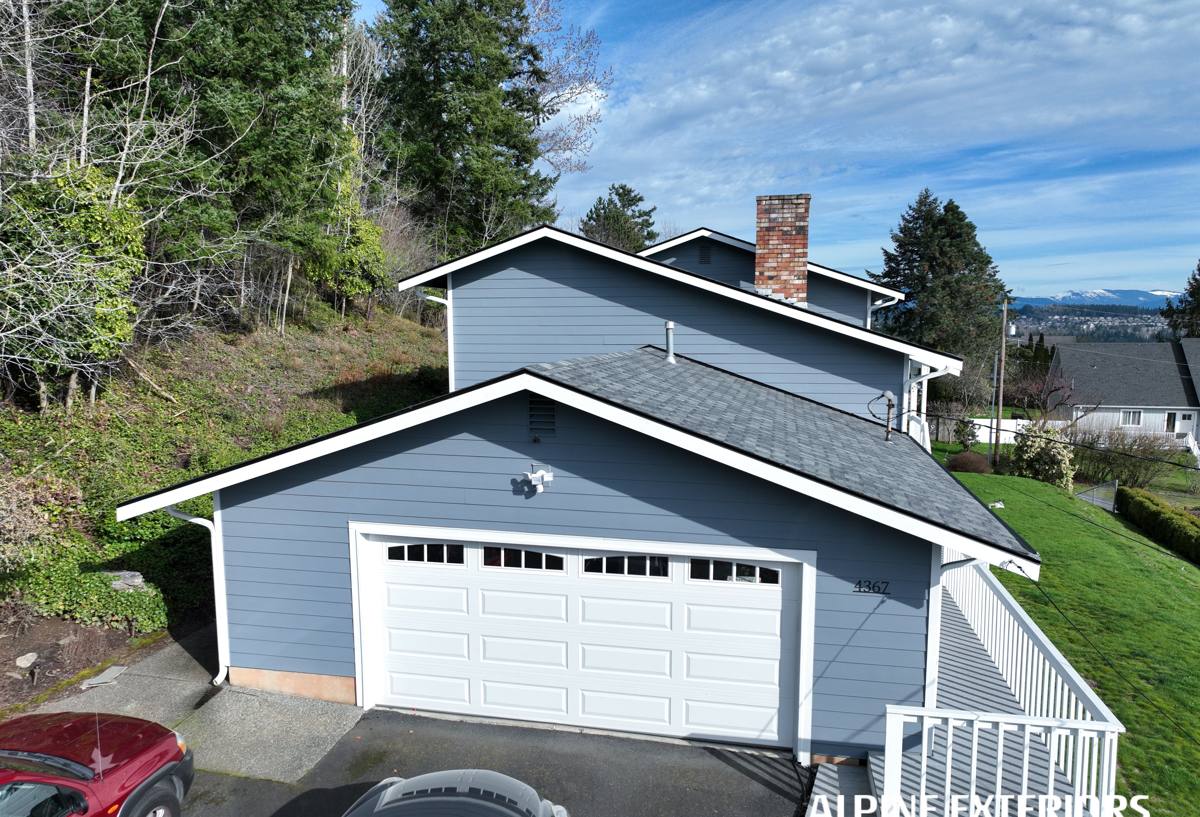
Why Salt Air and Moss Season Change the Job
Salt Air and Corrosion
Proximity to the bay means airborne salt settles on roofing surfaces, fasteners, and flashing year-round, not just during storms. Bare or poorly coated steel will corrode faster here than it would further inland. This is why coating quality and metal type matter more on South Hill than on a roof ten miles east — a roof spec that's fine in a dry inland town can underperform on a hill with a water view.
Moss and Shade
Mature fir and cedar cover much of South Hill, and shaded, north-facing slopes stay damp longer after every rain. On composition shingle roofs, that damp, rough surface is where moss takes hold first. Metal panels are smoother and drain faster, which denies moss the foothold it needs — but debris buildup at valleys, low-slope transitions, and behind chimneys still needs to be managed, or organic matter accumulates and holds moisture against the panel anyway.
Driving Rain and Wind
Rain here often comes in sideways off the water, which puts real pressure on lap joints, panel seams, and flashing details rather than just the field of the roof. A metal roof's water resistance comes almost entirely from how the seams, laps, and penetrations are executed — the panel material itself is rarely the weak point.
Standing Seam vs. Exposed Fastener: Which Fits South Hill
Both systems are legitimate metal roofing options, but they perform differently in a salt-air, high-rain environment, and the right choice depends on the home's roof pitch, budget, and how long the owner plans to own the property.
| Factor | Standing Seam | Exposed Fastener |
|---|---|---|
| Fastening | Hidden clips, no punctures through the panel face | Screws through the panel face with rubber-washer seals |
| Long-term weather resistance | Higher — no exposed penetrations for water or salt to attack | Good, but washers and fasteners degrade over time and need eventual replacement |
| Upfront cost | Higher material and labor cost | Lower upfront cost |
| Maintenance | Minimal beyond debris clearing | Periodic fastener inspection recommended, especially in salt air |
| Typical use | Primary residences, steeper or more visible roofs | Shops, outbuildings, budget-conscious projects |
For most South Hill homes — where salt air is a factor and many roofs are visible from the street or from neighboring lots on the hill — standing seam is the stronger long-term choice. Exposed fastener systems still have a place, particularly on secondary structures or where budget is the deciding factor, but the fastener penetrations are the first thing to watch as the roof ages near the bay.
What Correct Metal Roofing Actually Involves
A metal roof is only as good as the layers homeowners never see. The panels get the attention, but the underlayment, flashing, and fastening details are what actually determine whether the roof performs for its full service life.
- Solid, properly ventilated roof deck — rot or inadequate airflow underneath will undermine even a top-tier panel system
- Synthetic underlayment rated for the panel type, with ice-and-water membrane at valleys, eaves, and other vulnerable transitions
- Fasteners and clips matched to the panel metal to avoid galvanic corrosion — mixing incompatible metals is a common shortcut that causes premature staining and failure
- Properly lapped and sealed flashing at every penetration: chimneys, vents, skylights, and wall transitions
- Panel layout planned to minimize seams in high-exposure areas facing prevailing wind and rain
- Ridge and hip caps installed with correct ventilation detailing, not just capped over
- Ongoing sightline for debris management on shaded slopes so runoff paths stay clear
Skipping any one of these doesn't usually show up in year one. It shows up in year five or eight, as a leak at a valley, streaking below a mismatched fastener, or moss creeping in where debris was allowed to sit against the panel.
Our Process for a South Hill Metal Roof
1. On-Site Inspection and Assessment
We look at the existing roof structure, deck condition, ventilation, and how the specific lot's tree cover and sun exposure will affect the new roof over time — not just the roof in isolation, but how it sits on that particular piece of the hill.
2. Material and System Selection
We walk through panel style, gauge, and coating options based on the home's exposure, roof pitch, and budget, and explain the real trade-offs rather than steering toward the most expensive option by default.
3. Tear-Off or Overlay Decision
Where the existing roof and deck are sound, an overlay can sometimes work; where there's deck damage or the existing roofing would trap moisture against new metal, we recommend tear-off. We'll tell you honestly which situation you're in.
4. Installation
Deck repair as needed, correct underlayment, panel installation with attention to seam and lap detail, and flashing work at every penetration — the parts of the job that determine whether the roof still performs correctly a decade from now.
5. Final Walkthrough
We review the completed roof with the homeowner, cover basic maintenance expectations for a shaded, salt-air lot, and make sure drainage paths are clear before we leave the job.
Cost Factors on a South Hill Roof
Metal roofing costs more upfront than asphalt shingles, but the range on any given South Hill home depends on more than square footage.
| Factor | Why It Matters Here |
|---|---|
| Roof pitch and complexity | Steeper, multi-plane roofs common on older South Hill homes take more labor and material to detail correctly |
| Tear-off vs. overlay | Deck condition on older homes sometimes requires full tear-off, adding cost but avoiding trapped moisture |
| Panel system | Standing seam costs more than exposed fastener but reduces long-term maintenance in salt air |
| Access and site conditions | Tree cover, hillside grading, and tight lots can affect staging and labor time |
| Coating and gauge | Heavier gauge and marine-grade coatings cost more but hold up better this close to the bay |
We give straightforward, itemized estimates so homeowners can see exactly where the cost is going, rather than a single lump number that hides which choices are driving the price.
Why Hire a Crew That Already Works This Neighborhood
South Hill isn't uniform. A roof shaded by tall firs on one side of the hill deals with a different moss and moisture pattern than a more exposed roof closer to the water, and the age and construction style of homes varies block to block. A crew that already works this part of Bellingham has seen how these variables play out in practice — which slopes need extra attention to debris management, where salt exposure tends to hit fasteners first, and how local permitting and inspection typically go with the City of Bellingham and Whatcom County. That familiarity shows up in fewer surprises mid-project and a roof that's specified correctly the first time, instead of a generic install that has to be corrected once the first wet winter exposes the gaps.
Signs Your Current Roof Needs Attention
- Visible moss or algae streaking on shaded slopes or north-facing sections
- Rust staining running down from fasteners, flashing, or panel seams
- Granule buildup or shingle debris collecting in gutters (a sign the existing roof is aging out)
- Soft spots, sagging, or visible deck movement when walked on
- Water stains on interior ceilings, especially near valleys or chimneys
- Loose, lifted, or missing fasteners on an existing metal roof
- Debris consistently pooling against low-slope transitions instead of draining
Catching these early is usually the difference between a repair and a full replacement.
Get a Straight Answer for Your Roof
If you're weighing a metal roof for a South Hill home, we're happy to take a look, walk you through what your specific roof and lot actually need, and give you a clear, no-pressure estimate — no upsell, just an honest read on what the job requires. Fill out the form below to get started.