 Bellingham Exterior
 Roof Repair Built for Lynden's Weather, Not a Generic Climate
Lynden sits in the flat farm country of northern Whatcom County, but the roofs here don't get an easier ride than anywhere else in the region. The same wet Pacific weather systems that soak Bellingham and the coastline push inland and settle over Lynden too, bringing long stretches of driving rain, damp marine air, and short winter days that never quite dry a roof out between storms. Add in the mature trees around older farmhouses and newer subdivisions alike, and you get a moss season that can run most of the year instead of just a few wet months.
None of that means every roof problem in Lynden is dramatic. Most of what we get called out for is a specific, fixable failure — a cracked pipe boot, a wind-lifted shingle course, a valley that's been quietly funneling water under the flashing for a season or two. The trick is catching those problems early and repairing them correctly, so a small leak doesn't turn into decking replacement or an interior repair bill.
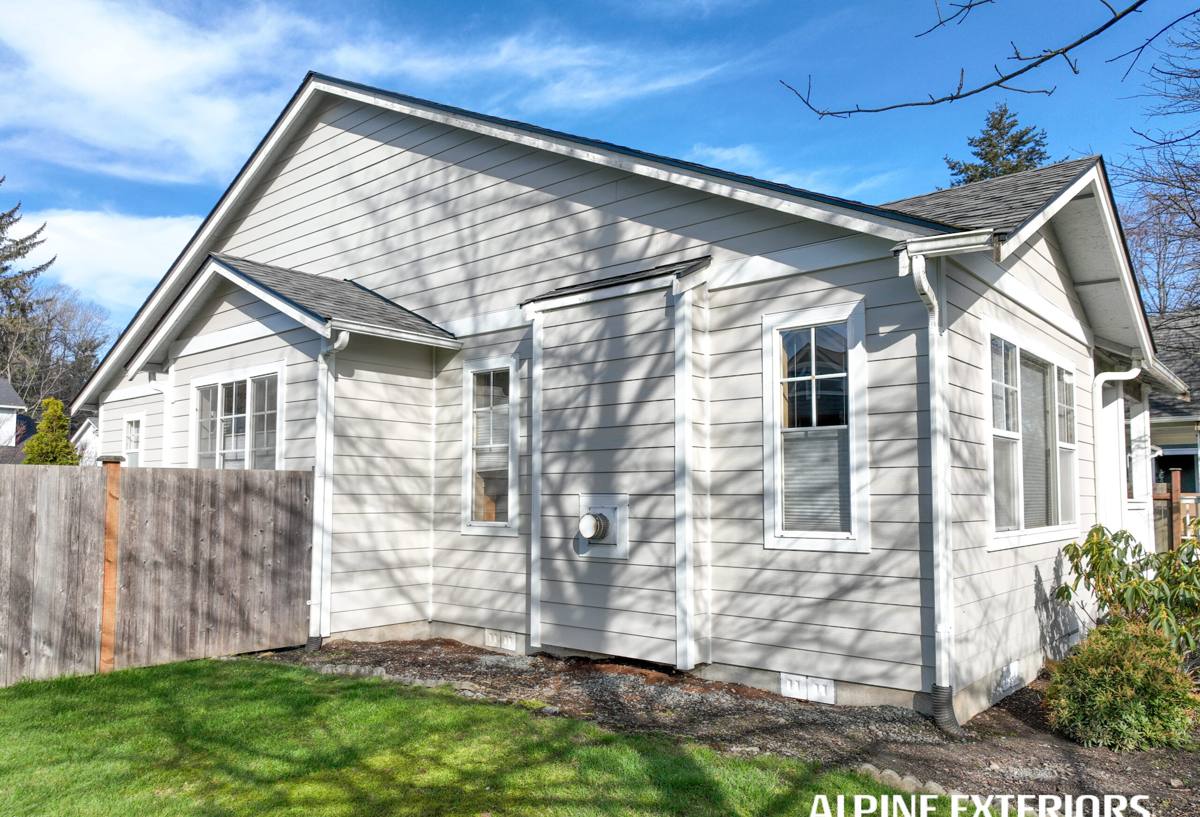
What Driving Rain, Moss, and Damp Air Actually Do to a Roof
Wind-Driven Rain
Rain that falls straight down mostly runs off the way a roof is designed to shed it. Rain that comes in sideways during a Whatcom County windstorm is a different problem — it gets pushed up under shingle tabs, into nail heads, and along the edges of flashing that would never see water in calmer weather. Over time this is what causes leaks that show up nowhere near where the water actually entered, because it's traveled along the underlayment or decking before finding a gap to drip through.
Moss and Organic Growth
Moss doesn't just look bad on a north-facing slope or a shaded section near overhanging trees — it holds moisture against the roofing material around the clock, even on days it isn't raining. On composition shingles that means accelerated granule loss and softer, weaker mat underneath. On any roof type, moss and the debris it traps in valleys and behind chimneys is one of the most common reasons we find hidden rot when we pull back a section for repair.
Marine Air and Corrosion
Whatcom County's air carries more moisture and salt content inland than most homeowners expect, especially compared to drier parts of Washington. That damp, salt-tinged air is harder on exposed metal — flashing, nail heads, vent caps, gutter fasteners — than it is on the shingles themselves. Undersized or bare-steel fasteners and flashing corrode faster here, and corroded flashing is a direct path to a leak even when the shingles above it look fine.
Signs a Lynden Roof Needs Repair Now
Roof problems in this climate rarely announce themselves with a dramatic indoor leak on day one. They tend to show up as smaller signs first, both inside and outside the house.
- Granules collecting in gutters or at downspout outlets, especially after a windy rain
- Moss or dark streaking concentrated on shaded or north-facing roof sections
- A soft or spongy feel underfoot near valleys, chimneys, or skylights (noted during inspection, not something to walk and test yourself)
- Daylight visible through the roof deck from inside an attic or crawlspace
- Water stains on ceilings or upper walls that appear only during heavy wind-driven storms
- Curling, cracked, or missing shingle tabs, particularly after a windstorm
- Rust streaking below metal flashing, vent boots, or gutter fasteners
- Sagging or discoloration along a valley line where two roof planes meet
Any one of these on its own might be minor. Two or three together, especially after a storm, usually means it's worth having someone look before the next round of rain finds the gap.
What a Correct Repair Actually Involves
Diagnosis Before Patching
The most common mistake in roof repair isn't bad workmanship — it's fixing the spot where water showed up inside the house instead of where it actually got in. Water travels along decking and underlayment before it drips, so a proper repair starts with tracing the leak back to its real source, which is often several feet from the visible stain.
Matching Materials, Not Just Covering the Spot
A patch that doesn't match the surrounding shingle's age, profile, and granule wear will shed water differently than the rest of the roof and can actually create a new failure point. Where an exact match isn't available, the right call is blending in a way that keeps the water path consistent, not just making the spot look presentable from the ground.
Flashing and Underlayment Get Replaced, Not Reused
Flashing around chimneys, valleys, skylights, and wall intersections is where most Whatcom County leaks actually originate, not the open field of the roof. Corroded or improperly lapped flashing needs to come out and be replaced with new material set in the correct shingle-over-flashing sequence — reusing old flashing to save a step is one of the quickest ways to have the same leak return within a year.
Moss Treatment Without Damaging the Roof
Moss removal matters, but how it's done matters more. Aggressive scraping or high-pressure washing can strip granules and shorten the life of otherwise sound shingles. A repair-appropriate approach removes active growth without stripping the surface, and addresses why moss is concentrating there in the first place — usually shade, poor airflow, or a low spot holding moisture.
Ventilation Gets Checked, Not Ignored
A roof that can't breathe traps moisture underneath the decking, which speeds up rot and makes moss and mildew worse from below as well as above. Any thorough repair includes a look at attic ventilation, since fixing the visible leak while ignoring poor airflow just delays the next problem.
Repair or Replacement? What Actually Decides It
Homeowners often assume any leak means a full replacement is coming. In most cases with a roof under 15–20 years old and reasonably intact shingles, targeted repair is the right and more cost-effective call. The table below covers the factors that actually tip the decision one way or the other.
| Factor | Leans Toward Repair | Leans Toward Replacement |
|---|---|---|
| Roof age | Under 15–20 years, within expected lifespan | At or past manufacturer's expected service life |
| Extent of damage | Isolated to one area, valley, or penetration | Spread across multiple slopes or recurring in different spots |
| Shingle condition nearby | Granules intact, tabs still flexible | Widespread curling, brittleness, or granule loss |
| Decking condition | Solid, no soft spots found on inspection | Soft, rotted, or delaminated decking discovered |
| Repair history | First or second repair in this area | Same spot has been patched multiple times already |
When Repair Is the Honest Answer
If the roof is otherwise sound and the damage is contained, replacing the whole thing isn't a better roof — it's just a more expensive one. Our standard is to repair when repair will hold, and say so plainly.
When We'll Tell You It's Time to Talk Replacement
If decking is compromised, damage is spread across the roof, or a repair would just be the third patch on the same failing section, we'll say that too, along with why — not as an upsell, but because a repair that won't actually hold isn't doing you any favors.
Common Roof Types Around Lynden
Composition (Asphalt) Shingle
The most common roofing material in the area, and generally the most straightforward to repair when the damage is caught early. The main variable is finding a close granule and profile match, which gets harder as a roof ages and the color weathers.
Metal Roofing
More common on newer builds and outbuildings around Lynden's rural properties. Metal roofs handle driving rain well but repairs center on fastener corrosion, sealant failure at seams and penetrations, and panel movement over time — different skill set than shingle repair, and not every crew is equally comfortable with both.
Older Cedar Shake
Some older Lynden homes still have cedar roofing. In this climate, cedar holds moisture and is especially prone to moss and rot in shaded sections, and it requires a repair approach suited specifically to that material rather than shingle techniques applied to it out of convenience.
Our Process for a Lynden Roof Repair Call
1. Inspection
We look at the roof from the ground and, where it's safe and useful, up close — checking the reported problem area along with valleys, flashing, and penetrations that commonly fail together in this climate.
2. Straight Explanation and Written Estimate
You get a plain explanation of what's actually wrong, what caused it, and what fixing it correctly involves — along with a written estimate before any work starts. No pressure toward replacement if repair is the honest call, and no vague scope if repair is what's needed.
3. The Repair Itself
Work is done to match the existing roof's materials and water-shedding path, with flashing and underlayment replaced rather than reused wherever they're part of the problem.
4. Cleanup and Follow-Up
Debris and old material are cleared from the site and gutters, and we're available afterward if anything about the repair needs a second look.
Why a Crew That Already Works Lynden Matters
Roof repair isn't just about the shingles — it's about knowing how a specific climate stresses a specific roof. A crew that regularly works Whatcom County knows which slopes in this area tend to hold moss, how local wind patterns drive rain into valleys and flashing, and what the common failure points look like on the roof types actually built here, from older farmhouses to newer development homes. That familiarity means faster, more accurate diagnosis on the first visit instead of guesswork, and a repair scheduled around real Lynden weather windows instead of a generic calendar. It also means being reachable afterward, from a company that's still local and still around if a question comes up later.
If you're seeing moss buildup, a stain that only appears after a windy storm, or granules piling up in the gutters, it's worth having a local set of eyes on it before the next system rolls through. We offer free, no-pressure estimates for roof repair in Lynden and the surrounding Whatcom County area — reach out through the form below and we'll take a straightforward look.