 Bellingham Exterior
 Why Sunnyland Roofs Take a Different Kind of Beating
Sunnyland sits close enough to Bellingham Bay that salt-laden air is a regular part of the weather cycle, and it's also tucked among mature trees that keep large sections of roof shaded for much of the year. That combination is harder on a roof than either factor alone. Salt air accelerates corrosion on exposed metal fasteners, flashing, and vent caps. Shade keeps roof surfaces damp longer after every storm, which is exactly the condition moss, moss, and algae need to take hold. Add Whatcom County's long stretch of driving rain — often wind-driven off the water rather than falling straight down — and you get roofs that see more sustained moisture exposure than homes just a few miles inland.
None of this means a Sunnyland roof is doomed to fail early. It means the materials, fastening details, and ventilation choices matter more here than they would in a drier, more sheltered part of the county. A replacement done to a generic spec, without accounting for local conditions, tends to show its age faster — curling shingles, streaked moss growth, and soft decking around valleys and eaves within a handful of years instead of a couple decades.
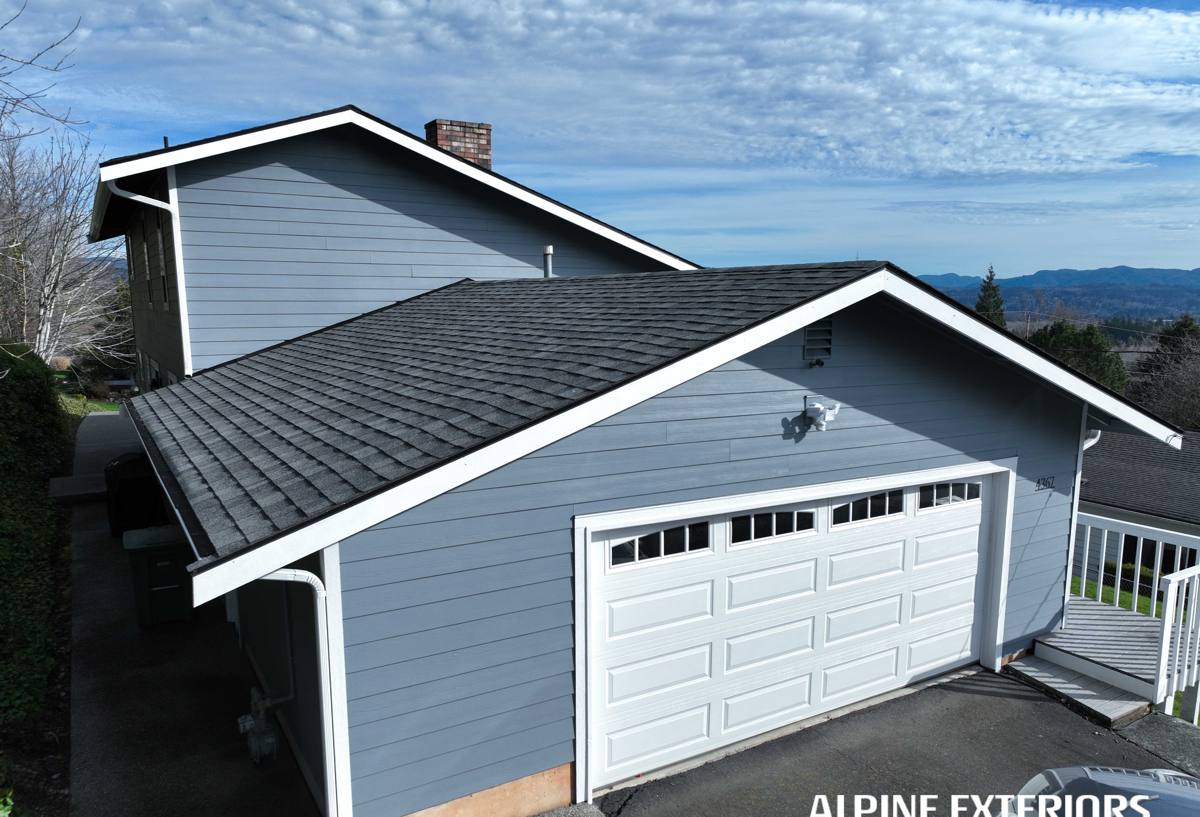
Signs It's Time to Replace, Not Repair
Not every roof problem calls for a full replacement, and a straight shooter will tell you when a repair is the smarter move. But there's a point where patching starts costing more than it saves. Common signs we look for on Sunnyland homes include:
- Granule loss heavy enough that you can see bare asphalt mat on multiple slopes, not just one weathered section
- Moss that keeps returning within a season or two of cleaning, especially on north-facing slopes
- Soft or spongy decking felt underfoot during inspection, usually near valleys, chimneys, or eaves
- Daylight visible through the roof deck from inside the attic
- Multiple past repairs in different areas, suggesting the whole roof is aging out at once rather than one isolated failure
- Shingles that are curling, cupping, or cracking across a broad area rather than in one storm-damaged spot
If a roof is showing two or more of these at once, repair usually becomes a short-term fix that delays a replacement you'll still need to do — often after some interior damage has already started.
What a Correct Roof Replacement Actually Involves
A roof replacement is more than swapping old shingles for new ones. Done right, it's a full system rebuild, and every layer matters as much as the surface material homeowners actually see.
Tear-Off and Deck Inspection
We remove the old roofing down to the deck rather than layering over it. This is the only way to actually see the condition of the plywood or OEM sheathing underneath — soft spots, rot around penetrations, or old water staining that a layover would simply hide for another decade. Any damaged decking gets replaced before anything new goes down.
Underlayment and Ice/Water Protection
Given how much wind-driven rain this area sees, underlayment quality isn't a place to cut corners. We use synthetic underlayment across the field and self-adhered ice-and-water membrane at eaves, valleys, and around all penetrations — the spots where wind-driven rain is most likely to work its way backward under the shingle line.
Flashing
Flashing around chimneys, skylights, walls, and roof-to-wall transitions is where most leaks actually originate, not the field of the roof itself. We replace flashing rather than reuse old pieces, since corroded or improperly lapped flashing is a slow leak waiting to happen — especially with the salt exposure common in this area.
Ventilation
Proper intake and exhaust ventilation keeps the attic temperature and moisture level balanced, which protects the new decking from the underside and helps prevent the ice-dam and condensation issues that come with our wet, mild winters. We check existing ventilation and correct it as part of the replacement rather than leaving an undersized or blocked system in place.
Choosing the Right Roofing Material for This Climate
There's no single "best" roofing material — the right choice depends on budget, roof pitch, tree cover, and how much long-term maintenance a homeowner wants to take on. Here's how the common options stack up for a shaded, salt-air, high-moisture setting like Sunnyland:
| Material | Moss/Moisture Resistance | Maintenance | Typical Lifespan |
|---|---|---|---|
| Architectural asphalt shingle | Good with proper ventilation and periodic cleaning | Low to moderate | 25-30 years |
| Standing seam metal | Excellent — sheds moisture fast, little surface for moss to grip | Low | 40-50+ years |
| Composite/synthetic shake | Good, resists rot better than wood shake | Low to moderate | 30-40 years |
| Cedar shake | Requires diligent upkeep in shaded, damp conditions | High | 20-30 years with upkeep |
We don't push one product over another as a rule — we walk through the trade-offs honestly. Cedar shake, for example, can look great, but in a shaded, damp neighborhood like Sunnyland it demands more consistent maintenance to avoid moss and rot than most homeowners realize going in. That's not a knock on the material itself, just a fact about how it behaves in this specific climate. Architectural asphalt remains the most common choice because it balances upfront cost, appearance, and performance well when installed with the right underlayment and ventilation detail.
Our Replacement Process, Start to Finish
- On-site inspection — we walk the roof and attic, check decking condition, flashing, and ventilation, and photograph problem areas so you can see exactly what we see.
- Written estimate — a clear scope of work and material options, with pricing broken out so you know what you're paying for and why.
- Scheduling — we plan around the weather window as much as Bellingham's forecast allows, since a dry deck matters more here than in drier climates.
- Tear-off and deck repair — old roofing removed, decking inspected and replaced where needed.
- Underlayment, flashing, and ventilation install — the system layers that determine how well the roof actually performs, not just how it looks.
- New roofing installed — to manufacturer specification, with attention to fastening patterns appropriate for wind exposure.
- Cleanup and final walkthrough — magnetic sweep for stray fasteners, debris removal, and a final review with the homeowner before we call the job done.
Cost Factors Homeowners Should Understand
Roof replacement costs vary by roof size, pitch, material, and how much decking or flashing repair is needed once tear-off exposes the real condition underneath. Rather than quote a number that won't match your specific roof, here's what actually moves the price:
| Factor | Why It Matters |
|---|---|
| Roof size and pitch | Steeper roofs take longer and require more safety equipment; larger roofs mean more material and labor |
| Number of layers being removed | Older homes sometimes have multiple layers of roofing that all need tear-off |
| Decking condition | Rot or soft spots found during tear-off require replacement sheathing before new roofing goes down |
| Material choice | Asphalt, metal, and composite products carry different material and installation costs |
| Roof complexity | Valleys, dormers, skylights, and chimneys all add flashing detail and labor time |
| Access | Tree cover and tight lot lines around a home can affect how equipment and materials get staged |
We give firm, itemized estimates after the on-site inspection, not before — a phone quote can't account for what's actually under the old roofing.
Preventing Moss and Moisture Problems After the New Roof
A well-installed roof still benefits from basic upkeep, especially in a shaded, damp setting. A few habits go a long way toward protecting the investment:
- Keep gutters clear of needles and debris so water actually drains instead of backing up under the eave line
- Trim back overhanging branches where practical to reduce shade and debris buildup on the roof surface
- Have moss growth addressed early with proper cleaning methods rather than pressure washing, which can strip granules and shorten shingle life
- Schedule a periodic visual check after major storms, particularly after high-wind events off the bay
- Watch for zinc or copper strips as a preventive moss measure if you're in a heavily shaded lot — worth discussing during your estimate
None of this requires a maintenance contract or constant attention — just a realistic understanding that a roof in this climate performs best when it isn't ignored for years at a stretch.
Why a Crew That Already Works Sunnyland Matters
Roofing crews that work all over Whatcom County without a real feel for a specific neighborhood tend to install to a generic standard — fine in a dry, open, inland setting, but not matched to what a shaded, salt-air, high-moisture lot like the ones in Sunnyland actually needs. Knowing which slopes in this area tend to hold moss, how much ventilation a shaded roof really needs, and which flashing details fail first in wind-driven rain isn't something you get from a spec sheet. It comes from doing the work here, on roofs like yours, season after season.
That local familiarity shows up in small decisions during the job — where to add extra ice-and-water membrane, how to detail a valley that collects debris from nearby trees, which ventilation setup actually balances out a shaded attic. Those are the details that separate a roof that looks fine for a year or two from one that performs correctly for its full expected life.
If your Sunnyland roof is showing its age or you just want an honest read on where it stands, we're glad to take a look. Fill out the form below for a free, no-pressure estimate — we'll walk the roof, tell you what we actually see, and give you a clear, itemized picture of your options.