 Bellingham Exterior
 Sehome's Siding Challenge Is Bigger Than People Think
Sehome sits close enough to Bellingham Bay to catch salt-laden air on windy days, and close enough to the hills and tree cover around it to stay damp and shaded through much of the fall, winter, and spring. That combination — salt exposure plus moisture that lingers instead of drying out — is exactly the kind of environment that wears down the wrong siding material fast. Homes in this neighborhood run the gamut from older construction with original wood siding to newer builds with vinyl or engineered wood products, and we've worked on enough of them to see the same failure patterns repeat: cracked caulk joints, swollen bottom edges, moss creeping up from grade, and paint that needs redoing every few years because the substrate underneath can't hold a finish.
This page is about one thing specifically: fiber cement siding, done correctly, on Sehome homes. Not a generic overview of siding materials, and not a sales pitch — a straight explanation of what this climate actually does to a home's exterior, what a correct fiber cement installation looks like, and why the crew doing the work matters as much as the product itself.
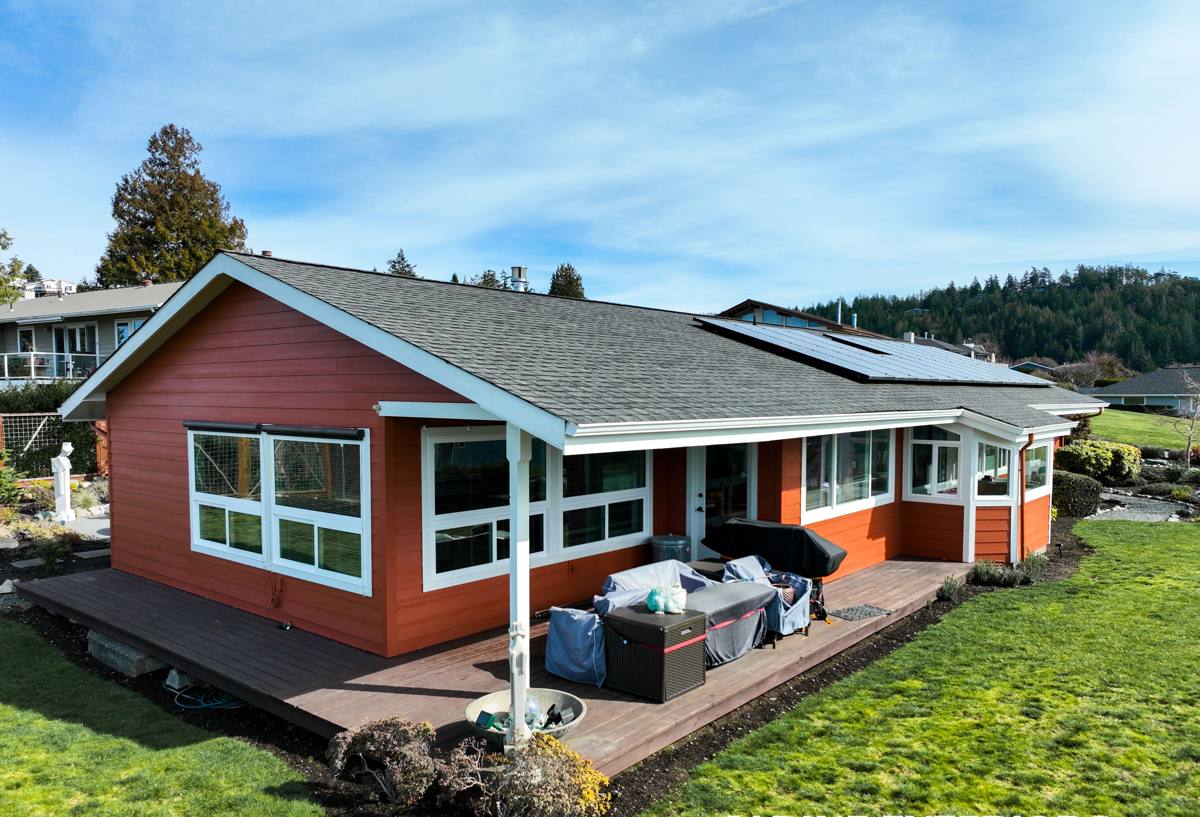
What Whatcom County's Climate Does to a House
Bellingham's marine climate is mild compared to a lot of the country, but "mild" doesn't mean easy on a building envelope. Three things stack up against exterior siding here, and Sehome gets all three:
- Salt air: Proximity to Bellingham Bay means airborne salt settles on exterior surfaces, accelerating corrosion of exposed fasteners and breaking down finishes that aren't formulated to resist it.
- Driving rain: Wind-driven rain off the water pushes moisture sideways into siding laps, seams, and trim joints — not just straight down, which is what a lot of siding details are designed to handle.
- Moss season: Long stretches of overcast, damp weather from fall through spring create ideal conditions for moss and algae growth on any surface that stays wet, especially on shaded elevations and lower courses near landscaping.
None of these are dramatic, one-time events. They're slow, constant pressure that adds up over years. A siding material and installation that can shrug off Whatcom County's day-to-day weather will outperform one that merely survives a single storm.
Why We Only Install James Hardie Fiber Cement
We install James Hardie fiber cement siding exclusively — no vinyl, no LP SmartSide, no Cemplank or Allura fiber cement, no primed spruce or cedar. That's a deliberate standard, not a limitation of what we're capable of installing.
What the alternatives get right — and where they fall short here
Vinyl is inexpensive and low-maintenance, but it's a thin plastic product that expands, contracts, and can warp or crack under UV exposure and temperature swings, and it doesn't hold up well to physical impact. Engineered wood products like LP SmartSide use treated wood strand substrates that resist moisture better than raw wood, but they're still wood-based, meaning long-term moisture exposure — the kind Sehome gets for months at a stretch — is the one thing that can still compromise them if a seam or cut edge isn't sealed perfectly and stays that way. Cedar and primed spruce are traditional, attractive options, but real wood siding in a marine climate needs consistent repainting, caulking, and vigilance against rot, moss, and insects — upkeep that a lot of homeowners underestimate when they choose it.
Why James Hardie
James Hardie fiber cement is a cement-based composite, not wood or plastic. It doesn't absorb water the way wood does, it doesn't expand and contract with temperature the way vinyl does, and it's non-combustible, which matters more each year in the Pacific Northwest. Hardie also engineers specific product lines for different climate zones — the HZ5 line is built for regions with freeze-thaw cycles and sustained moisture exposure, which fits Whatcom County's weather pattern. The factory-applied ColorPlus finish is baked on under controlled conditions and backed by a substantial warranty, which is a meaningfully different proposition than field-applied paint that has to cure correctly on-site and then survive Bellingham's damp season year after year.
What a Correct Fiber Cement Installation Actually Involves
Fiber cement siding is only as good as its installation. A huge share of the siding failures we see on inspection weren't caused by bad material — they were caused by shortcuts in how it was hung. In a climate like Sehome's, these details aren't optional extras; they're the difference between siding that lasts decades and siding that fails at the seams within a few years.
The details that matter most in this climate
- Proper clearance from grade and hard surfaces: Siding needs a minimum gap above soil, patios, decks, and roof lines so splash-back and standing moisture don't wick into the bottom edge of the boards.
- Correct flashing at every penetration: Windows, doors, hose bibs, light fixtures, and vents all need flashing details that shed water outward, not just caulk covering a gap.
- Rainscreen or drainage plane behind the siding: A ventilated gap between the siding and the water-resistive barrier lets any moisture that does get behind the boards drain and dry out instead of sitting against the sheathing.
- Fastener spec and placement: Corrosion-resistant fasteners, driven at the correct depth and location, matter even more near saltwater air where standard fasteners corrode faster.
- Sealed and back-primed cut edges: Every field cut exposes raw fiber cement that needs to be sealed per manufacturer spec before it's installed, not painted over after the fact.
- Correct lap and joint treatment: Butt joints need to be flashed or fitted with H-jointers per Hardie's installation instructions, not just caulked and hoped for.
Skip any one of these and you don't necessarily see a problem right away — you see it two, five, or eight years later, as moisture finds the one place it wasn't supposed to get in.
Our Process for a Sehome Siding Project
1. On-site assessment
We start by walking the house — every elevation, not just the obvious ones. Shaded, moisture-prone sides facing away from direct sun get particular attention, since those are usually where moss, algae, and rot show up first in this neighborhood's tree-covered lots.
2. Tear-off and substrate inspection
Once old siding comes off, we inspect the sheathing and framing underneath for water damage before anything new goes up. New siding over compromised sheathing just hides a problem instead of solving it — and hidden problems in a climate this damp don't stay hidden long.
3. Water management first
We install the water-resistive barrier, flashing, and drainage plane before a single piece of Hardie board goes up. This is the layer that actually keeps Sehome's driving rain and prolonged damp season out of the wall assembly — the siding itself is the second line of defense, not the first.
4. Installation to manufacturer specification
Boards, fasteners, clearances, and joints are installed to James Hardie's published specifications — the same specs that keep the product warranty intact. We don't treat manufacturer instructions as a suggestion.
5. Final walkthrough
We go over the finished job with the homeowner, point out anything worth knowing for long-term care, and make sure every detail — trim, caulking lines, fixture reinstalls — is finished, not just "close enough."
Cost Factors for a Sehome Fiber Cement Project
Every home is different, so we won't quote a number without seeing the house, but these are the factors that actually move the price on a Sehome fiber cement siding project:
| Factor | Why It Matters |
|---|---|
| Current siding material and condition | Wood or vinyl tear-off is more labor-intensive than a simpler removal, and hidden rot found underneath adds repair scope |
| House size and wall complexity | More corners, dormers, and roof intersections mean more cutting, flashing, and detail work |
| Siding profile and accessories chosen | Lap width, panel vs. plank, trim style, and soffit work all affect material and labor cost |
| Substrate repairs needed | Any rotted sheathing or framing discovered during tear-off has to be addressed before new siding goes on |
| Access and site conditions | Hillside lots, mature landscaping, or tight setbacks common in established neighborhoods can affect staging and scaffolding needs |
Caring for Hardie Siding in a Salt Air, High-Moss Climate
Correctly installed James Hardie siding is low-maintenance, but "low-maintenance" isn't "no-maintenance" anywhere near Bellingham Bay. A simple annual rinse-down removes accumulated salt film and slows moss and algae growth before it takes hold, especially on north-facing and shaded walls. Keep an eye on caulking at trim joints and penetrations — caulk is the one component of the system that ages faster than the siding itself and is easy to touch up before it becomes a moisture entry point. Trim back vegetation that's grown up against the siding, since constant leaf contact holds moisture against the surface and speeds up moss colonization. None of this is heavy work, but staying on top of it is what lets Hardie siding go the distance in this climate instead of just the national average.
Checklist: What to Confirm Before Hiring a Siding Contractor in Sehome
- Are they James Hardie factory-trained or certified installers, not just occasional installers of the product?
- Will they show you the flashing and drainage plane details before boards go up, not just the finished exterior?
- Do they inspect and address sheathing condition during tear-off, or just cover whatever's underneath?
- Can they explain their fastener spec and why it fits a coastal, high-moisture area?
- Do they carry proper licensing and insurance for exterior work in Washington State?
- Will they put the installation warranty and manufacturer product warranty in writing?
Why Local Experience in Sehome Matters
A crew that already works this neighborhood knows what its houses tend to run into — where moss builds up fastest, which elevations take the worst of the wind-driven rain, and what older construction in this part of Bellingham typically has hiding under the existing siding. That's not something you can fully substitute with a generic install checklist. It shows up in fewer surprises during tear-off, fewer callbacks after the job, and a finished exterior that's actually built for the specific conditions of this street, not just siding in general.
If you're weighing a siding project on your Sehome home, we're glad to walk the property, look at what you're currently dealing with, and give you a straight, no-pressure assessment of what correct fiber cement installation would involve for your house. Use the form below to request a free estimate.