 Bellingham Exterior
 Window Installation in Sehome: Built for What This Climate Actually Does to Windows
Sehome sits close enough to Bellingham Bay that salt-laden air is a daily fact of life, and close enough to the hills and tree cover around it that shade, moisture, and moss have plenty of time to work on a house. Windows in this neighborhood don't fail because they're old in the abstract sense — they fail because years of driving rain, damp air, and a moss season that can run eight or nine months a year find every gap in a frame, sash, or seal and slowly widen it. A window installation done right here has to account for all three of those pressures at once, not just swap old glass for new.
That's a different job than window installation in a dry climate. In Whatcom County, the install itself — flashing, sealing, drainage, material choice — matters as much as the window unit you buy. A premium window installed with the wrong flashing detail will leak here inside a few winters. A modest window installed correctly can outlast it by a decade.
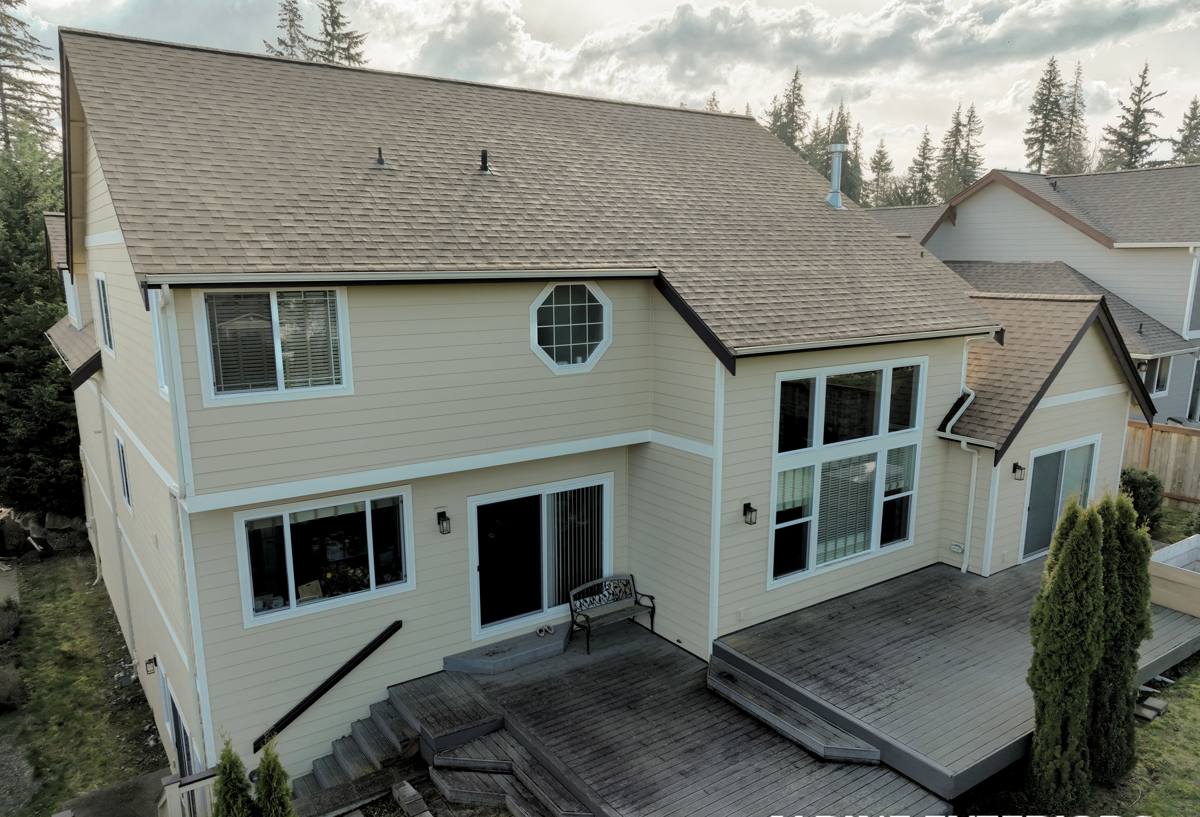
Signs a Sehome Home Needs New Windows
Most homeowners call us after noticing one or two symptoms, not because they've been tracking window performance for years. In our experience working this area, the following are the most reliable signs that windows are no longer doing their job:
- Visible fog or moisture trapped between panes of double-glazed windows — the seal has failed and can't be repaired, only replaced
- Soft or discolored wood trim around the window, especially on the north or west-facing walls that take the brunt of storms off the bay
- Drafts you can feel with a hand near the sash, even with the window latched
- Windows that are difficult to open, close, or lock — often a sign the frame has swelled, warped, or shifted
- Green or black growth building up in the tracks or on the sill faster than you can keep up with cleaning it
- A noticeable jump in heating costs without any other explanation
- Paint that keeps failing on the exterior trim around the window opening, no matter how often it's redone
Any one of these can be a minor fix. Two or three together, especially on an older window, usually means the unit and its surrounding assembly are past the point where repair makes sense.
What a Correct Window Installation Actually Involves
A window installation is really four separate jobs stacked together, and skipping or rushing any one of them is where most failures start.
Removal and Rough Opening Prep
Old windows come out carefully so the surrounding wall assembly — sheathing, framing, existing weather-resistive barrier — can be inspected before anything new goes in. This is the point where hidden rot or old water damage shows up. In a wet climate like this one, it's common to find some degree of moisture damage around older window openings that wasn't visible from outside. That damage gets addressed before the new window goes in, not covered over.
Flashing and Weather Barrier Integration
This is the single most important step for long-term performance in a region that sees as much driving, wind-blown rain as ours does. Flashing has to be layered correctly — sill pan first, then side flashing, then head flashing — so that any water that does get behind the siding is directed back out, not trapped against the framing. The new window's flashing also has to tie into the existing weather-resistive barrier with proper shingle-lap order, so water always sheds downward and outward rather than pooling at a seam.
Insulation and Air Sealing
The gap between the window frame and the rough opening gets sealed with a proper low-expansion foam or backer rod and sealant — never packed tight with fiberglass insulation alone, which does little to stop air movement and can hold moisture against the frame. Done correctly, this step is what actually stops the drafts homeowners notice.
Interior and Exterior Finish Work
Trim, caulking, and paint or stain are the last line of defense and the first thing that shows wear. Exterior caulking in particular has to be a product rated for continuous exterior exposure and movement, since it's the surface taking direct hits from rain and UV for the life of the window.
Choosing a Window for Salt Air, Rain, and a Long Moss Season
Frame material matters more here than in drier parts of the state, because the frame is what's exposed to moisture and salt air year-round. There's no single "best" material — each comes with trade-offs worth understanding before you decide.
Frame Material Trade-offs
| Material | How It Handles This Climate | Maintenance | Where It Fits |
|---|---|---|---|
| Vinyl | Doesn't rot or corrode from salt air; performs consistently in damp conditions | Low — occasional cleaning, no painting | Budget-conscious replacements, rental properties, most standard homes |
| Fiberglass | Very stable in temperature and moisture swings; strong resistance to warping | Low — can be painted if desired | Homes wanting durability with a more refined look, larger window units |
| Wood-clad | Attractive interior wood with an exterior cladding shielding it from weather; cladding seams need attention | Moderate — exterior cladding needs periodic inspection | Historic-style homes prioritizing a traditional wood interior look |
| Aluminum | Prone to condensation and thermal transfer in our wet, cool climate without a thermal break | Moderate — watch for corrosion near salt air over time | Best limited to thermally-broken commercial-style applications |
Because of how this compares in practice, we steer most Sehome homeowners toward vinyl or fiberglass for standard replacements — not because other materials are bad products, but because they hold up with the least ongoing maintenance against salt air and near-constant moisture. Solid wood without cladding is one we generally advise against for direct weather exposure in this climate; it's not that the wood itself is inferior, it's that maintaining bare wood against this much rain and humidity is a genuine, ongoing burden most homeowners underestimate.
Glass and Glazing Options
Double-pane, argon-filled, low-E glass is the standard baseline we recommend for this area — it balances cost with real performance against our mild-but-damp winters. Triple-pane adds meaningful sound dampening and a bit more insulation value, which some homeowners near busier streets or with rooms facing prevailing weather find worthwhile. It costs more and adds weight to the sash, which matters for larger openings. We'll walk through both options against your actual home rather than defaulting to the upsell.
Our Process for a Sehome Window Installation
- On-site assessment — we look at existing windows, framing condition, and any moisture history before quoting anything
- Honest recommendation — material, glazing, and scope based on what your home actually needs, not a one-size package
- Written estimate — clear line items, no vague allowances
- Scheduling around weather — openings are only exposed for as long as necessary; we plan installs to minimize the window a home sits open to rain
- Removal, inspection, and any needed repair — addressing rot or damage found during removal before it gets covered up
- Installation with full flashing and air-sealing detail — the steps described above, done in order, every time
- Final walkthrough — testing operation, checking seals, and reviewing basic care with the homeowner before we consider the job done
Why a Crew That Already Works Sehome Matters
Window installation isn't a generic skill that transfers evenly from one climate to another. A crew that mostly works drier regions can install a technically sound window and still get flashing sequencing wrong for a climate where wind-driven rain hits from multiple directions across a season. A crew working Bellingham and the surrounding Whatcom County neighborhoods regularly has already seen how local wall assemblies, siding types, and older construction methods in this area interact with new window installations — and knows which details can't be skipped.
There's also a practical side: permitting and code requirements can vary by jurisdiction, and a local crew already knows what Bellingham and Whatcom County inspectors expect on a window replacement or structural opening change, which keeps a project moving instead of stalling on paperwork.
Living With Your Windows After Installation: Moss Season Upkeep
New windows still need some seasonal attention in this climate. A little upkeep goes a long way toward protecting the investment:
- Clear window tracks and weep holes of debris and moss buildup a few times a year, especially heading into the wet season
- Check exterior caulking annually for cracking or separation, particularly after a hard winter
- Keep nearby vegetation trimmed back so leaves and moisture don't sit directly against the frame or sill
- Wipe down sills after extended wet stretches to keep organic growth from getting a foothold
- Watch for any soft spots developing in wood trim even on new installs, since paint and caulk are wearable finish layers, not permanent barriers
None of this is intensive, but skipping it is how even a well-installed window ends up with the same moss and moisture problems as the one it replaced.
Cost Factors for Window Replacement in Sehome
Every home is different, so we don't quote sight-unseen, but the factors that actually move the price are consistent from project to project.
| Factor | Why It Affects Cost |
|---|---|
| Number and size of windows | More openings and larger units mean more material and labor |
| Frame material | Vinyl is typically the most budget-friendly; fiberglass and wood-clad cost more upfront |
| Glazing (double vs. triple-pane) | Triple-pane adds material and weight-handling cost per unit |
| Condition behind the existing window | Rot or water damage found during removal adds repair scope before install can proceed |
| Opening changes | Resizing an opening or changing window style costs more than a like-for-like swap |
| Access and site conditions | Second-story windows, tight lot access, or extensive trim work add labor time |
As a broad range, straightforward like-for-like window replacements tend to run from the low thousands per window down to a few hundred for smaller units, with whole-house projects varying widely based on the factors above. The only way to get a real number is a look at your specific windows and openings.
Mistakes We See in Past Sehome Window Installations
A lot of the repair and replacement calls we get aren't from window failure — they're from installation shortcuts that caught up with the home years later.
- Caulk used as the only water management strategy, with no proper flashing behind it
- Foam or insulation packed into the gap without an actual air-sealing detail, leaving drafts even though the gap looks "filled"
- New windows installed into openings with existing rot that was never addressed, just boxed in
- Mismatched flashing sequencing that traps water against the sheathing instead of directing it out
- Undersized or missing weep holes, which lets moisture and moss buildup accumulate inside the frame track
Every one of these looks fine on install day. The problems show up two, three, or five winters later — which is exactly why the installation details matter as much as the window brand.
Get a Free, No-Pressure Estimate
If your Sehome home has windows showing any of the signs above, or you're planning ahead of the next wet season, we're happy to take a look and give you a straightforward assessment — no pressure, no upsell script. Fill out the form below to schedule a free estimate.