 Bellingham Exterior
 Why Siding Repair Looks Different in the Puget Area
Homes in and around the Puget area of Whatcom County take on a specific combination of stress that a lot of siding was never engineered to handle well: salt-laden marine air moving in off the water, long stretches of driving rain, and a moss season that can run from fall through spring. None of these factors is dramatic on its own. Together, over years, they find every weak point in a siding system — a nail popped too high, a caulk joint that dried out, a corner that was never properly flashed. Siding repair here isn't just patching a hole. It's understanding how water and salt move through a wall system and making sure the fix actually addresses that, not just the cosmetic symptom.
We work on homes throughout this part of Bellingham regularly enough to know the patterns: which elevations take the worst of the weather, where moss tends to establish first, and which older installation habits are causing the callbacks we get asked to fix today.
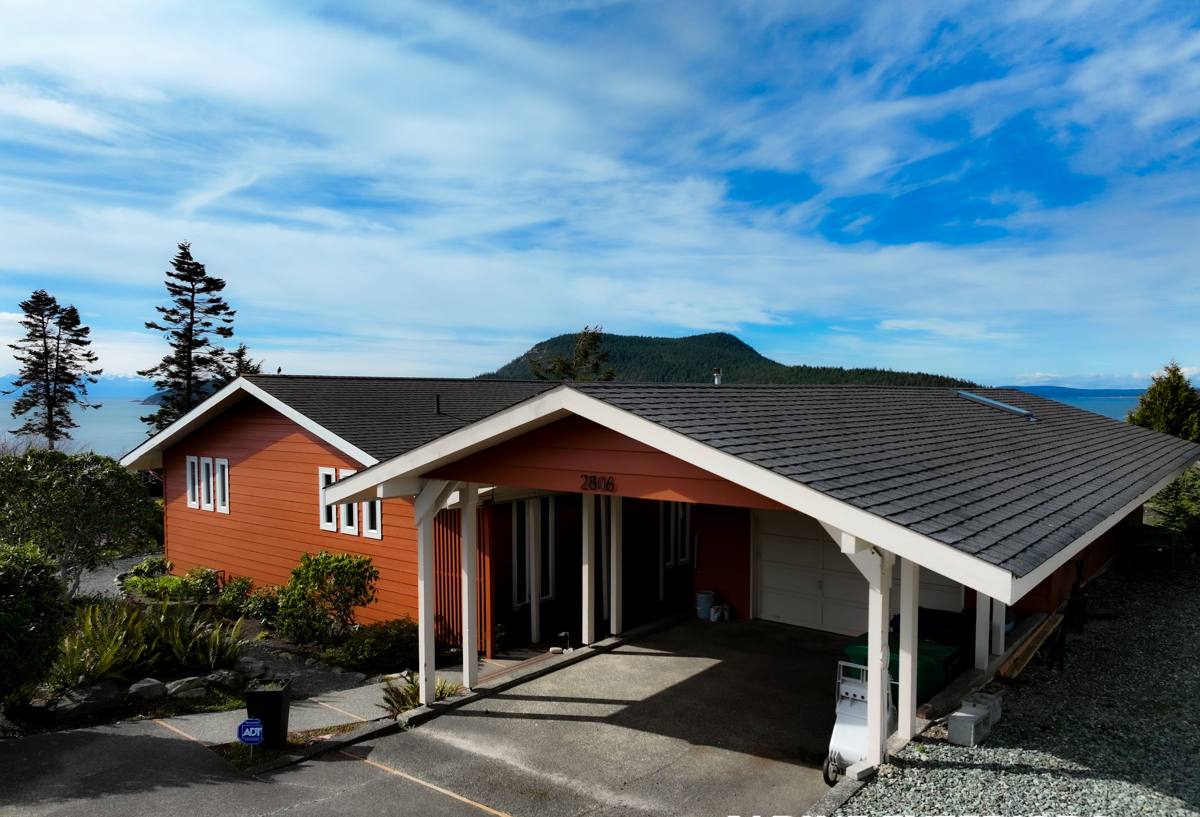
What the Regional Climate Actually Does to Siding
Salt Air
Proximity to Puget Sound means airborne salt is a constant, low-level presence. It accelerates corrosion on exposed fasteners, staples, and any metal trim or flashing that isn't rated for a marine environment. On siding materials that rely on paint film for protection, salt exposure combined with UV can break that film down faster than it would inland, exposing the substrate underneath to moisture it wasn't designed to face.
Driving Rain
Bellingham doesn't just get rain — it gets wind-driven rain that hits siding at an angle instead of running straight down it. That matters because a lot of siding failures aren't from water landing on a surface, they're from water being pushed sideways into laps, seams, and butt joints that were only ever designed to shed water falling vertically. Driving rain finds every gap that isn't properly lapped or sealed.
Moss and Sustained Moisture
Shaded, north-facing, and tree-lined walls in this area hold moisture longer than they would in a drier climate, and moss takes hold anywhere organic debris and dampness sit undisturbed. Moss itself doesn't destroy siding, but it traps moisture against the surface for extended periods, which is exactly the condition that causes rot in wood-based products and accelerates coating breakdown on painted surfaces.
Signs Your Siding Actually Needs Repair
Some damage is obvious. A lot of it isn't, especially from ground level. Here's what we look for and what homeowners can watch for between inspections:
- Soft or spongy spots when pressed, especially near the bottom courses and around window trim
- Visible gaps at butt joints, corners, or where siding meets trim, doors, or windows
- Paint that's bubbling, peeling, or alligatoring in patches rather than evenly across a wall
- Streaking or dark staining below joints, which usually means water is running behind the siding, not just over it
- Moss or algae buildup that returns quickly after cleaning, indicating a wall that stays wet longer than it should
- Nail heads that have backed out or rusted through the surface
- Warping, cupping, or visible separation between boards
- Interior signs — musty smell, damp drywall, or peeling interior paint on an exterior wall
Repair vs. Replacement: How We Make the Call
Not every problem calls for a full re-side, and we're not going to tell a homeowner they need one if a targeted repair will genuinely hold up. The honest answer depends on how much of the wall assembly is compromised, not just how much siding is visibly damaged.
| Factor | Favors Repair | Favors Replacement |
|---|---|---|
| Extent of damage | Isolated to one or two areas | Spread across multiple elevations |
| Underlying sheathing/framing | Dry, solid when probed | Soft, rotted, or water-stained |
| Material condition overall | Rest of siding is sound | Widespread cracking, warping, or failed coating |
| Cause of failure | Isolated flashing or caulk failure | Systemic issue — wrong material for this climate, failed house wrap |
| Age of existing siding | Newer, still within expected service life | At or past the end of its realistic lifespan |
When we're on-site for a repair estimate, we're checking for moisture behind the wall, not just what's visible on the surface. A repair that goes back over hidden rot or trapped moisture is a repair that fails again within a year or two — that's a bad use of anyone's money.
What a Correct Repair Job Involves
A siding repair that actually holds up in this climate isn't just "replace the damaged board." It's a sequence, and skipping steps is exactly how a repair ends up needing to be redone:
- Remove damaged material carefully — pulling boards without tearing the surrounding house wrap or flashing that's still doing its job.
- Inspect what's underneath — sheathing, framing, and house wrap get checked for rot, softness, or existing water intrusion before anything new goes back on.
- Address the actual cause — if a flashing detail failed or a joint was never properly lapped, that gets corrected, not just covered over.
- Dry out and repair the substrate — any compromised sheathing or framing gets replaced, not painted over.
- Re-flash and re-wrap correctly — proper lapping order (top over bottom, working with gravity and wind-driven rain, not against it) matters more here than in drier climates.
- Install matching or compatible siding material — fastened per manufacturer spec, with correct nailing patterns and clearances.
- Seal and finish — caulk only where the manufacturer specifies it, using a product rated for the exposure, and match paint or factory finish as closely as possible.
That inspection step in the middle is the one that gets skipped most often by crews trying to move fast. It's also the one that determines whether a repair lasts five years or fifteen.
Why We Repair With James Hardie Fiber Cement
When a repair calls for new material — whether it's a full section replacement or patching in a compromised area — we use James Hardie fiber cement, the same material we install on full re-side projects. We don't install vinyl, LP SmartSide, Cemplank, Allura, primed spruce, or cedar, and that standard doesn't change for repair work.
The reason is straightforward: fiber cement is non-combustible, it doesn't absorb and swell with moisture the way wood-based products can, and Hardie's ColorPlus factory finish is baked on rather than field-applied, which means it holds up better to UV and salt exposure than a job-site paint job. In a climate that cycles between driving rain and long dry spells, that consistency matters. It also means a repair patch will weather in a way that's consistent with the rest of the wall over time, rather than aging on a different curve.
Hardie's HZ5 product line in particular is engineered for climates with higher moisture exposure, which fits this region well. Using one consistent, climate-appropriate material across a repair and the surrounding original siding also avoids the mismatched-expansion and mismatched-weathering problems that come from patching one product into a different one.
Our Process for a Siding Repair Estimate
We keep the estimate process straightforward:
- On-site inspection of the damaged area and the surrounding siding, checking for moisture and soft spots by hand, not just by eye
- Honest assessment of whether this is a repair or whether the underlying problem is bigger than the visible damage
- A written scope of what we'd remove, what we'd inspect underneath, and what materials we'd use
- A clear price before any work starts — no surprise change orders for problems we should have caught during inspection
- Cleanup that leaves the work area the way we found it
We're not going to upsell a full re-side when a targeted repair is the right call, and we're not going to quote a "quick patch" when we can see the underlying wood is compromised. Both of those calls require actually opening things up and looking, which is what the inspection is for.
Why a Crew That Already Works This Area Matters
Siding repair done right depends on understanding the specific conditions a wall is exposed to — which direction the prevailing wind-driven rain comes from, which elevations hold moss longest, how salt exposure differs a few blocks inland versus closer to the water. A crew that works Bellingham and the Puget area regularly has already seen how different original installations here have failed and why, which shortens the diagnosis time and improves the odds the repair addresses the real cause the first time.
It also matters for accountability. A local crew is going to be around next season if a question comes up, and has a reputation in the area worth protecting — that's a different incentive structure than a traveling crew that won't be back.
What to Ask Before Hiring for Siding Repair
- Will you inspect the sheathing and framing underneath, not just replace the visible board?
- What caused this damage, and will the repair address that cause or just cover it?
- What material will you use, and will it weather consistently with my existing siding?
- Is the price final, or should I expect it to change once you open the wall up?
- Do you carry insurance, and can I see it?
A contractor who can't answer the first two questions clearly, on the spot, probably isn't planning to actually diagnose the problem before repairing it.
Get an Honest Look at Your Siding
If you're seeing soft spots, gaps, staining, or moss that keeps coming back on a home in the Puget area, it's worth having someone look before it turns into a bigger repair. We offer free, no-pressure estimates — we'll tell you straight whether it's a repair or something more, and what we'd actually do about it.