 Bellingham Exterior
 Deck Repair in Silver Beach: A Lakeside Neighborhood With Its Own Wear Pattern
Silver Beach is one of the older neighborhoods along Lake Whatcom, with homes ranging from modest cottages built close to the shoreline to newer houses set up the slope with a lake view. Decks in this neighborhood take a specific kind of punishment: humidity coming off the lake, salt-tinged marine air that moves in from Bellingham Bay and settles into the lake basin, tree cover on many hillside lots, and a long stretch of the year where surfaces just don't get to dry out fully between rain events. That combination wears on a deck faster than it would on a drier, more open, inland lot.
This page is specifically about repairing decks that are already built and already showing wear — not new construction. A lot of deck problems in Silver Beach start small and stay hidden under the decking boards for years before they show up as something a homeowner actually notices, like a soft spot underfoot or a railing post that's started to move. Getting the repair right means understanding what this climate does to a deck over time, not just patching whatever's visible from the yard.
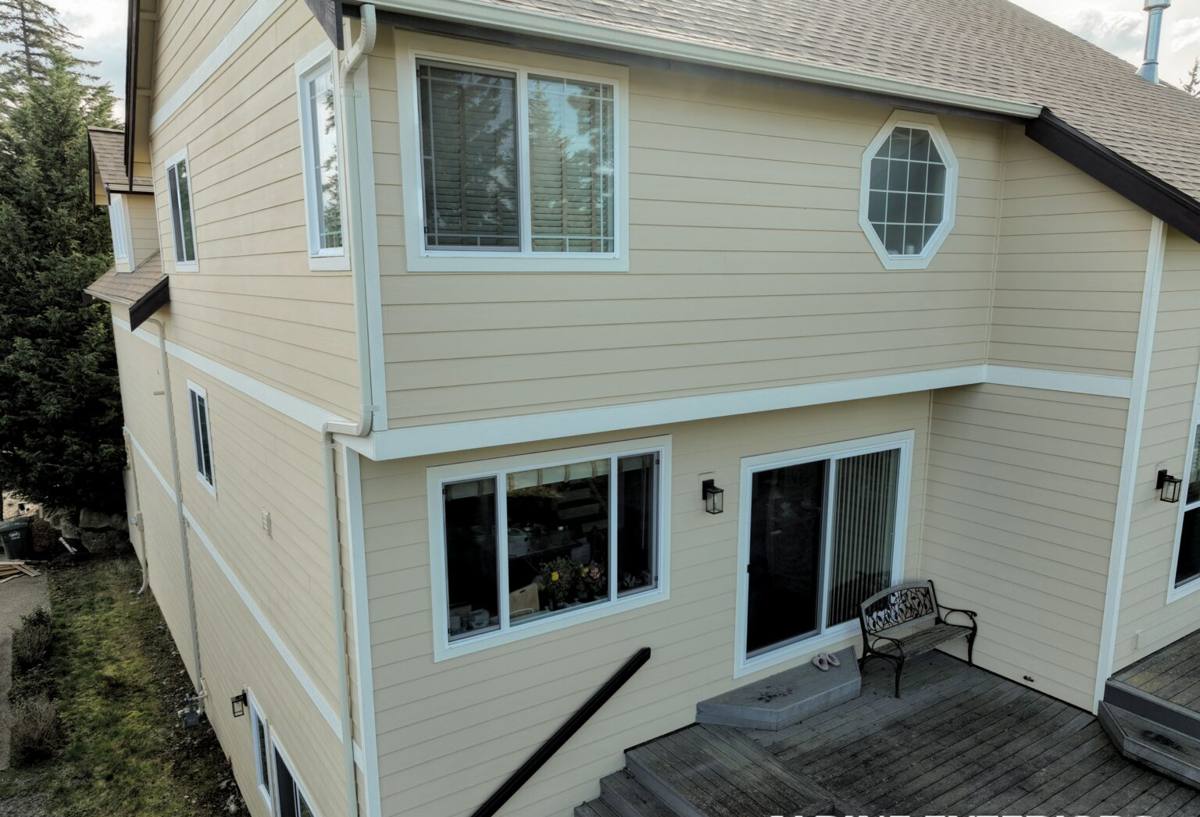
What Lake Whatcom's Climate Does to an Aging Deck
Salt-Tinged Marine Air and Corroding Hardware
Air moving inland off Bellingham Bay carries a mild salt content that reaches well past the immediate shoreline, and it settles into the Lake Whatcom basin along with the lake's own humidity. That steady exposure works on exposed metal — fasteners, joist hangers, post brackets, railing connectors — faster than it would on a home further inland. A corroding fastener loses holding strength well before it looks obviously bad, which is part of why deck hardware failures often surprise homeowners who thought the deck "looked fine."
Driving Rain That Finds the Weak Points
Wind off the lake pushes rain sideways into a deck rather than letting it fall straight down, and that wind-driven pattern finds the gaps a calm, dry day would never expose — under railings, into the ledger connection where the deck meets the house, and between boards that have started to cup or close up over time. A deck built correctly years ago can still develop these weak points as fasteners loosen, boards shift, or old flashing degrades, and the wettest wall or the most exposed corner of the deck usually shows problems first.
A Moss Season That Outlasts Most Maintenance Schedules
Between lake humidity, regular Pacific Northwest rainfall, and shade from trees on many Silver Beach lots, horizontal deck surfaces rarely get a long, uninterrupted dry stretch for much of the year. Moss and algae take hold fastest on shaded or north-facing sections, and once established, they hold moisture against the board surface longer than bare wood or composite would on its own. Left alone, that moisture retention accelerates rot in wood decking and can make the walking surface genuinely slick and unsafe, not just unsightly.
Signs Your Deck Needs Repair, Not Just Cleaning
Some deck problems are obvious. Others sit quietly under the surface until they've gotten worse than a homeowner would guess from a visual check alone. Worth walking your deck and checking for the following before assuming a pressure wash and some new screws will solve it:
- Boards that feel soft, spongy, or flex noticeably underfoot, especially near the house or in shaded areas
- Any gap or movement where the deck's ledger board meets the house wall
- Railing posts that wobble or shift when pushed firmly by hand
- Rust streaks running down from screws, bolts, or joist hangers
- Stair stringers that flex, crack, or feel uneven underfoot
- Persistent moss or algae that returns quickly after cleaning, particularly on shaded sections
- Standing water that doesn't drain within a few hours after rain
- Visible daylight or gaps between the deck framing and the posts or footings below
Any one of these on its own might be a minor fix. A few of them together, especially anything involving the ledger board or support posts, usually points to a structural issue that needs to be addressed before it gets worse.
What a Correct Deck Repair Involves
Structural Repairs Come First
The framing underneath a deck — the ledger board, joists, beams, posts, and footings — is what actually holds the structure up, and it's the part most homeowners can't fully inspect themselves. A correct repair starts by checking the ledger board's attachment and flashing, since that connection carries a large share of the deck's total load and is one of the most common failure points on an older deck in a wet climate. Joists that have started to rot, especially near the ledger or where they've held standing moisture, typically need to be sistered with new lumber or replaced outright rather than patched. Posts and footings get checked for movement, rot at the base, or inadequate bearing, since a deck can look stable from the surface while sitting on a compromised post below.
Surface and Railing Repairs
Once the structure underneath is sound, surface-level repairs — replacing individual rotted or cupped boards, refastening loose decking, repairing or rebuilding damaged stair treads and railings — are usually straightforward. The key here is matching fastener grade and spacing to what the rest of the deck actually needs in this climate, not just replacing what failed with the same hardware that failed in the first place.
Flashing and Drainage Correction
A large share of the deck repairs we see in Silver Beach trace back to missing or degraded flashing at the ledger board, where the deck attaches to the house. Older decks, or decks that were never flashed correctly to begin with, let water track behind the ledger and into the house rim joist over time, which causes rot that's often worse than anything visible on the deck itself. Correcting that flashing, along with making sure boards are gapped properly for drainage and the area under the deck can actually dry between storms, is standard on any repair we do here — not an upsell.
Repair or Replace? What We Actually Look At
| Factor | Repair Usually Makes Sense | Replacement Is the Better Call |
|---|---|---|
| Ledger board and framing | Solid wood, isolated rot in one or two joists | Widespread rot, soft framing across multiple joists or beams |
| Posts and footings | Footings sound, posts show only surface wear | Undersized or shifting footings, rotted post bases |
| Decking surface | Scattered board damage, structure otherwise sound | Most boards cupped, splitting, or holding moss despite cleaning |
| Age of the deck | Newer deck with a specific, identifiable problem | Older deck nearing or past typical material lifespan |
| Cost relative to a new build | Repair cost is a fraction of full replacement | Repairs are piling up and approaching replacement cost anyway |
We'll tell you honestly which side of that line your deck falls on. A lot of decks in Silver Beach are structurally sound but need targeted work at the ledger, a handful of joists, or the fastener hardware — full replacement isn't always necessary, and we're not going to sell you one when a correct repair will hold up just as well.
Our Deck Repair Process in Silver Beach
- On-site inspection. We check more than the surface — probing joists and the ledger connection for soft spots, checking post and footing condition, and looking at how the deck's specific exposure to sun, shade, and lake-facing wind has affected different sections differently.
- Written scope. We separate what's structural and needs to happen from what's cosmetic and optional, so you know exactly what you're paying for and why, before any work starts.
- Structural work first. Ledger reattachment and flashing, joist sistering or replacement, and post or footing repair happen before anything cosmetic, since surface work on a compromised structure doesn't hold.
- Surface and railing repair. Board replacement, refastening, and railing or stair repair follow once the framing underneath is sound.
- Walkthrough. We go over what the repaired deck actually needs going forward given its specific exposure — sun, shade, lake-facing wind — so you're not guessing at a maintenance schedule.
Materials and Hardware We Use for Repairs
For structural repairs, we use pressure-treated lumber rated for the specific application — ground contact where it applies, standard elsewhere — sized to match or exceed the original framing. Fasteners and structural hardware are corrosion-resistant grades suited to sustained damp, marine-influenced conditions, not the mild-steel hardware that's often the reason a deck needed repair in the first place. For surface repairs, we can typically match existing wood decking or, where a homeowner wants to reduce future maintenance, patch in composite or PVC boards on sections where that's a practical option. We'll talk through what actually makes sense for your deck rather than defaulting to whatever's on the truck.
Why a Crew That Already Works Silver Beach Matters
Two decks on the same street in Silver Beach can be dealing with genuinely different problems — one sitting low with a lake-facing exposure that takes direct wind-driven rain, another shaded most of the day by trees on the slope above and dealing with moss more than wind. A crew that regularly works this neighborhood already recognizes that variation and knows which failure patterns show up where, instead of applying one generic repair approach to every deck that comes in. That local familiarity is part of what keeps a repair from becoming a repeat visit a year or two later.
If you've got a deck in Silver Beach that's showing some of the signs above, or you just want an honest read on its condition, we're happy to take a look. Reach out below for a free, no-pressure estimate.