 Bellingham Exterior
 Windows in Columbia Take a Different Kind of Beating
Columbia sits close enough to the water and the weather patterns that roll off Bellingham Bay that its homes deal with a steady combination most inland neighborhoods don't: salt-laden air, wind-driven rain that hits window seals sideways rather than straight down, and a moss and moisture season that can stretch from October well into spring. None of that is dramatic on its own. It's the cumulative effect — years of it, working on the same seals, sills, and frames — that eventually shows up as fogged glass, soft trim, or a window that won't latch tight anymore.
Window installation done right in this part of Whatcom County isn't just about picking a good window. It's about how that window gets set into the wall, flashed, and sealed so the assembly actually holds up to what Columbia's climate throws at it year after year.
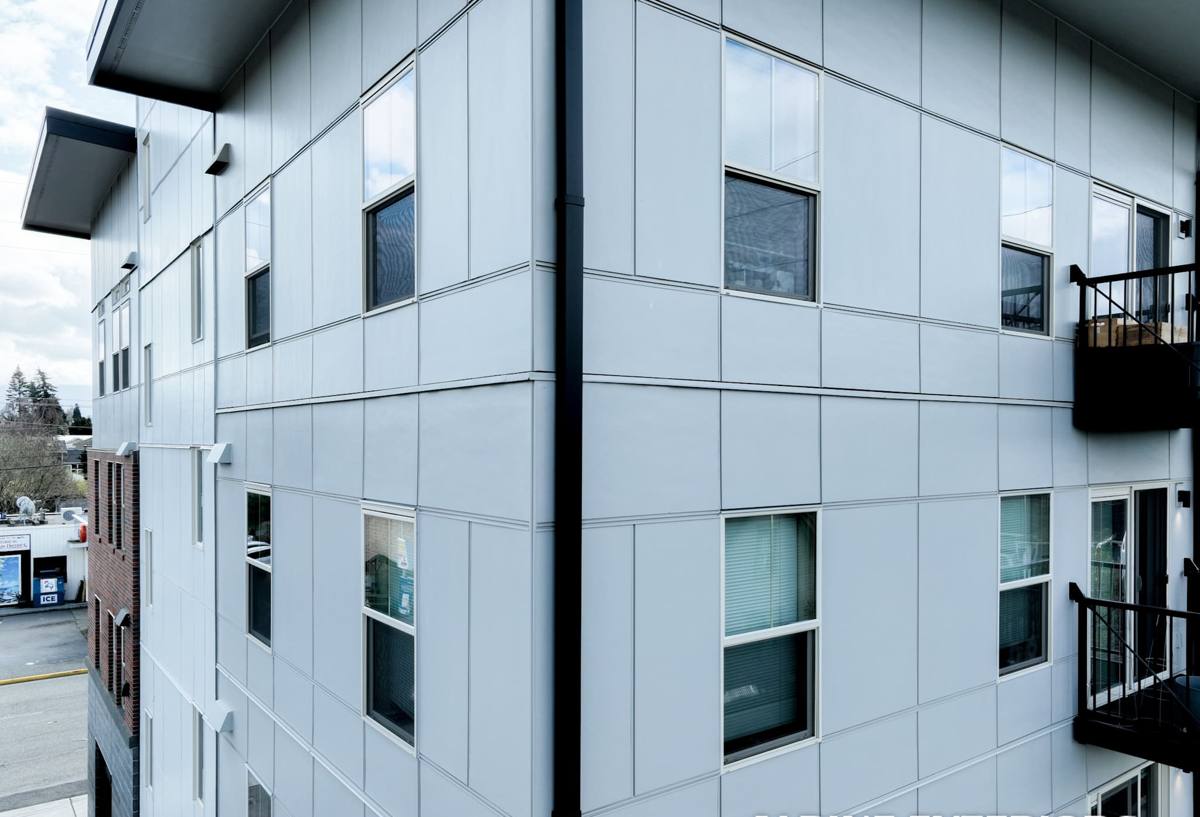
What Salt Air, Rain, and Moss Actually Do to Windows
Salt Air
Even a few miles inland, airborne salt accelerates corrosion on window hardware — hinges, cranks, locks, and especially aluminum components that aren't specifically rated for coastal exposure. Cheaper hardware can start pitting or seizing years before the window itself would otherwise need replacing.
Driving Rain
Bellingham's rain rarely just falls — it's pushed by wind off the Sound, which means it hits window assemblies at an angle instead of running straight down the glass. That puts real pressure on the flashing details around a window, not just the caulk bead homeowners can see. A window that would perform fine in a calmer climate can leak here if the flashing and drainage plane weren't built correctly during installation.
Moss and Prolonged Moisture
Long, wet stretches keep wood trim, sills, and the wall assembly around a window damp for extended periods. Moss and mildew don't just grow on roofs — they take hold on north-facing trim and sills that don't get enough sun to dry out between rain events. Left alone, that moisture works its way into end grain and fastener holes, and that's where rot starts.
Signs a Columbia Home's Windows Are Losing the Battle
- Fogging or moisture trapped between panes of a double- or triple-glazed unit — the seal has failed
- Soft or spongy trim and sills when pressed with a thumb
- Visible gaps, cracked caulk, or daylight around the frame
- Windows that are hard to open, close, or lock — often a sign the frame has shifted or swollen
- Persistent condensation on the inside of the glass in cooler months
- Drafts you can feel standing near the window on a windy day
- Green or black staining on the sill or trim that keeps coming back after cleaning
Any one of these can be a minor fix. Several at once, especially on the same window, usually means the installation itself — not just the window — has reached the end of its useful life.
What a Correct Window Installation Actually Involves
The window itself gets most of the attention, but in this climate the installation details matter as much or more. A quality job includes:
- Removing the old window carefully to inspect the rough opening for hidden rot or water damage before anything new goes in
- Repairing any damaged framing or sheathing found during removal, rather than installing over it
- Correct flashing sequence — sill pan, side flashing, and head flashing layered so water is directed out and down, never trapped behind the window
- Proper shimming and leveling so the window operates smoothly and doesn't stress the frame over time
- Sealing with the right materials — not just a bead of exterior caulk, but backer rod and sealant sized correctly for the gap, plus interior air sealing
- Insulating the gap between the window frame and rough opening without overpacking it, which can bow the frame
- Weatherproofing the exterior trim and sill so moisture sheds away from the assembly instead of collecting on it
Skip or rush any one of these steps and the window can still look fine from the curb while quietly failing behind the trim.
How We Handle a Window Installation in Columbia
1. On-Site Assessment
We start by looking at the actual condition of the existing windows and the wall assembly around them — not just quoting off a photo or a phone call. Rot, prior water intrusion, and settling all change what the job needs.
2. Honest Recommendation
We'll tell you which windows genuinely need replacing now, which can wait, and which just need better maintenance. Not every window on a home needs to go at once.
3. Product Selection
We walk through frame material, glass package, and hardware options suited to a coastal-influenced Whatcom County climate — with honest trade-offs, not a sales pitch.
4. Removal and Inspection
Old windows come out carefully so we can inspect the rough opening. Any hidden rot or damage gets addressed before the new window goes in — this is the step that gets skipped most often on rushed jobs, and it's the one that causes the most callbacks down the road.
5. Installation and Flashing
The window is set, shimmed, and flashed to shed wind-driven rain correctly, with attention to the drainage plane behind the siding.
6. Sealing and Finish
Interior and exterior sealing, trim work, and a final operational check — every window opens, closes, and locks the way it should before we call the job done.
Choosing a Window for a Whatcom County Home
There's no single "best" window for every home — the right choice depends on exposure, budget, and how much maintenance you want to take on. Here's how the common frame materials stack up for this climate:
| Frame Material | Coastal/Moisture Performance | Maintenance | Trade-offs |
|---|---|---|---|
| Vinyl | Good — won't rot or corrode | Low | Limited color/finish options; can expand/contract with temperature swings |
| Fiberglass | Very good — stable and moisture-resistant | Low | Higher upfront cost |
| Wood (clad exterior) | Good if maintained; exposed wood is vulnerable | Moderate to high | Needs regular inspection and finish upkeep, especially in shaded, damp spots |
| Aluminum | Poor without marine-grade hardware and coatings | Low to moderate | Prone to corrosion and conducts cold; we don't recommend standard aluminum for this exposure |
For glass, a dual-pane unit with a quality low-E coating is standard for this region and handles Bellingham's temperature range well. Triple-pane adds cost and weight but can be worth it on north- or west-facing walls that take the brunt of wind-driven rain and cold.
Mistakes We See — and Avoid
- Caulk-only sealing: relying on exterior caulk alone with no proper flashing behind it — looks fine at first, fails within a few seasons
- Skipping the sill pan: without one, any water that does get past the seal has nowhere to go but into the wall
- Ignoring the rough opening: installing a new window into a rotted or out-of-square opening just hides the problem temporarily
- Overpacking insulation: stuffing the gap around the frame too tight can bow it and cause operating problems
- Mismatched hardware: standard hardware in a salt-air zone that starts corroding well before the glass or frame needs attention
Why Hiring a Crew That Already Works Columbia Matters
A window installer who's worked other homes in this part of Bellingham already knows which exposures take the worst of the driving rain, which framing details tend to show hidden moisture damage, and what actually holds up over a Whatcom County winter versus what just looks good on installation day. That's not something you can fully substitute with a general contractor's standard national playbook — the flashing and sealing approach that works in a drier climate isn't always the right call here.
It also means straightforward, local accountability: someone who knows the neighborhood, isn't driving in from out of the county, and can be back out if something needs a second look.
A Quick Checklist Before You Hire Anyone
- Do they inspect the rough opening, not just swap the window?
- Do they explain their flashing and sealing approach, or just the window brand?
- Are they licensed and insured for exterior work in Washington?
- Do they give you a straight answer on which windows need replacing now versus later?
- Will they put the scope of work and materials in writing before starting?
If your windows in Columbia are fogging, drafting, sticking, or just showing their age, we're glad to take a look and give you a straightforward assessment — no pressure, no upsell. Fill out the form below for a free estimate.